
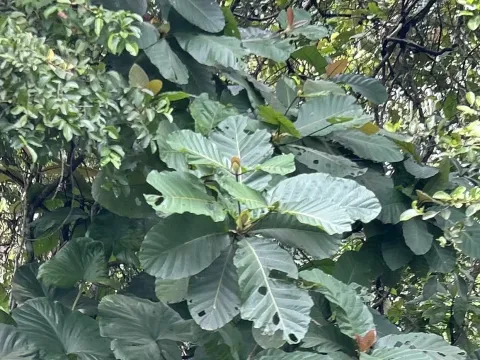
Mitragyna stipulosa
Mitragyna stipulosa
Mitragyna stipulosa is a prominent tropical tree species belonging to the Rubiaceae family. It is native to the humid rainforests and swampy regions of Central and West Africa, where it plays a significant role in the local ecology.
What the section contains
Mitragyna stipulosa
The species requires a tropical climate characterized by consistently high humidity and rainfall throughout the year. It does not tolerate freezing temperatures, making it suitable only for specific tropical agricultural zones.
Soil preferences include deep, fertile, and moist substrates. While the tree thrives in swampy areas, it performs best when planted in well-drained but water-retentive alluvial soils near riverbanks.
Botanically, the tree is identified by its opposite leaves with prominent stipules and dense, spherical flower heads. It grows as a large tree with a spreading crown that provides significant shade in its natural habitat.
Agrotechnical management involves maintaining soil moisture levels and ensuring protection from extreme exposure in the initial years of growth. Regular monitoring of the canopy structure is necessary for optimal development.
The economic value of Mitragyna stipulosa is twofold: it provides high-quality timber and serves as a vital source of traditional medicine. The wood is utilized for furniture making and rural construction.
In the pharmaceutical context, the bark and leaves are harvested for their alkaloid content. These compounds are studied for their potential analgesic and anti-inflammatory properties within traditional medicine practices.
Sustainable harvesting is essential. Harvesters typically strip small sections of the bark or prune branches rather than felling the entire tree, ensuring that the population remains viable over time.
Processing involves rapid drying of the harvested plant material to preserve the chemical integrity of the active ingredients. Controlled environment storage is required to prevent moisture-related degradation.
As a forest-friendly crop, the species is increasingly recognized for its role in riverbank stabilization. By planting M. stipulosa, landowners contribute to erosion control and ecosystem restoration.