
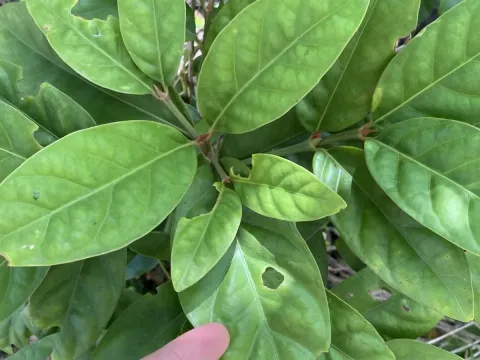
Mitriostigma
Mitriostigma
Mitriostigma is a genus of flowering plants belonging to the Rubiaceae family. Native to South Africa, these plants are primarily cultivated for their lush, glossy foliage and fragrant flowers, which resemble those of gardenias but are noted for their specific botanical structure.
What the section contains

Mitriostigma
The culture thrives in temperatures ranging from 18°C to 25°C. As a tropical species, it requires a humid environment, typically above 60% relative humidity, to prevent leaf edge browning and to ensure proper development of floral buds during the blooming season.
Soil requirements focus on an acidic, well-draining peat-based mix. Amending the soil with perlite or pumice is standard practice to maintain aeration, ensuring the root system receives oxygen while retaining necessary moisture levels for growth.
Lighting should be bright but filtered. In agricultural and conservatory settings, providing adequate light intensity is crucial, as low light levels will result in leggy stems and poor flower production, significantly reducing the ornamental value of the crop.
Irrigation management involves keeping the substrate consistently moist but not waterlogged. During winter, the plant enters a period of slower growth, requiring reduced water inputs, though the foliage should still be monitored for hydration levels.
Spider mites represent a primary threat in greenhouse environments. These pests thrive in dry conditions and can quickly colonize the plant, leading to significant chlorosis and eventual necrosis of the foliage if left unmanaged.
Mealybugs are another common pest, often found in the leaf axils and on younger stems. Their presence can stunt overall growth and transmit viral diseases, necessitating the use of systemic insecticides or manual removal in smaller batches.
Root rot, typically caused by species such as Phytophthora or Pythium, occurs due to stagnant water in the root zone. This is a common failure in irrigation management that results in a rapid decline of the plant’s health and root necrosis.
Nutrient imbalances, particularly iron deficiency, are common when the substrate pH rises above optimal levels. This leads to interveinal chlorosis, which hinders the plant’s ability to photosynthesize effectively and depletes its energy reserves.
Prevention strategies involve implementing strict sanitary protocols for tools and containers. Ensuring that new plants are quarantined before being introduced to the main cultivation area is essential to prevent the spread of pests and latent pathogens.