
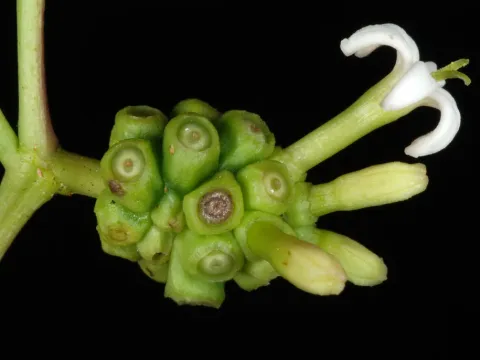
Morinda
Morinda
Morinda, scientifically known as Morinda citrifolia, belongs to the Rubiaceae family and is widely recognized as a tropical evergreen shrub or small tree.
What the section contains

Morinda
This crop thrives in tropical environments, requiring consistent temperatures ranging between 20°C and 35°C and high levels of rainfall throughout the year to support continuous growth.
It is remarkably adaptable to diverse soil conditions, showing resilience in alkaline, saline, or poor-quality soils, although it prefers well-drained loamy structures.
Agricultural management involves routine pruning to maintain tree height for easier harvesting and to encourage the development of lateral branches that produce more fruit.
In terms of usage, the crop is primarily valued for its fruits, which are processed into juices, powders, and extracts used extensively in the global nutraceutical market.
The primary agricultural threats to Morinda include common sap-sucking pests like aphids, scales, and mealybugs, which can significantly stunt the growth of young plants.
Root rot caused by Phytophthora species is a critical concern, especially in fields with poor drainage, which can lead to rapid wilting and tree death.
Sooty mold frequently develops on the surface of leaves as a secondary infection following pest infestations, blocking sunlight and reducing overall tree vigor.
Management strategies often prioritize integrated pest management (IPM) to maintain the organic status of the produce, utilizing natural predators rather than synthetic chemicals.
Proactive field maintenance, including debris removal and maintaining appropriate spacing, is essential to minimize the spread of fungal spores and ensure adequate ventilation.
Harvesting Morinda is a labor-intensive, continuous process because the trees produce flowers and mature fruits simultaneously throughout the entire year.
Farmers typically harvest fruits in a semi-mature to fully ripe state, depending on the intended processing method, such as extraction or fermentation for juice production.
Manual harvesting is the standard practice, as the fruit structure is delicate and susceptible to bruising, which quickly leads to decay if the skin is compromised.
Logistics are vital post-harvest, as the fruit must be transported to processing facilities quickly to prevent over-ripening and ensure the highest quality of active compounds.
Beyond the fruit, certain commercial operations also harvest leaves and roots, which require different specialized drying and processing techniques to preserve their phytochemical integrity.