
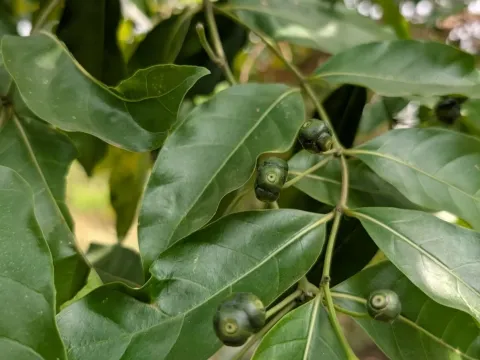
Morinda lucida
Morinda lucida
Morinda lucida, commonly known as the brimstone tree, is a tropical woody plant belonging to the Rubiaceae family. It is widely recognized for its significant medicinal properties, particularly in West African traditional medicine, where its bark, leaves, and roots are heavily utilized.
What the section contains
Morinda lucida
The plant thrives in moist tropical forests and savannah regions, preferring well-drained soils rich in organic matter. It requires consistently high temperatures and adequate annual rainfall to maintain vigorous growth and development.
While Morinda lucida displays remarkable adaptability to various soil types, ranging from sandy loams to heavier clays, optimal biomass production is achieved in fertile substrates with a neutral or slightly acidic pH balance.
In its native habitat, it often serves as an understory tree, demonstrating high shade tolerance during its juvenile phase. However, for commercial plantations, ensuring adequate light exposure is vital to maximize the growth rate and phytochemical content.
Propagation is primarily achieved via seeds, which require scarification to break dormancy and enhance germination rates. Vegetative propagation using stem cuttings is also a viable method to preserve specific genetic traits and pharmaceutical efficiency.
Agricultural production focuses on harvesting the bark, leaves, and root system, which are rich in bioactive compounds such as anthraquinones and alkaloids. The yield capacity is significantly influenced by the tree age and the planting density within the field.
Leaf harvesting can be performed systematically throughout the growing season. In contrast, bark extraction must be conducted with extreme precision to avoid girdling the tree, which could lead to its decline or mortality.
Industrial cultivation necessitates rigorous management of soil fertility, as the rapid growth of Morinda lucida can deplete essential soil nutrients. Integrated fertilization and crop rotation cycles are essential for sustained long-term productivity.
In various regions of West Africa, this crop plays a critical role in the pharmaceutical industry. Strict standardization of harvesting protocols is essential to ensure a consistent concentration of active metabolites in the final medicinal product.
Future agricultural improvements rely on the breeding of high-yielding cultivars that exhibit higher concentrations of secondary metabolites, thereby increasing the economic return per hectare of land.
While Morinda lucida is naturally resilient to many common plant diseases, it is susceptible to root rot in poorly drained environments. Maintaining a precise irrigation and drainage balance is critical to prevent fungal infections.
Pest management primarily involves monitoring for common leaf-eating insects, such as caterpillars and aphids, which can cause significant damage to young plantations if left unchecked. Early detection is key to successful mitigation.
Stem-borne fungal pathogens can often gain entry through improper pruning cuts or mechanical damage to the bark. Implementing strict hygiene standards for all gardening and harvesting tools is essential to minimize plant stress and disease transmission.
Weed control is extremely critical during the first 24 months of the tree life cycle, as the young plants are easily outcompeted for light and water. Effective mulching and periodic weeding are recommended practice.
Biological control measures are preferred over chemical pesticides to maintain the chemical integrity of the medicinal harvest and to promote long-term ecological balance within the plantation area.