
Mitragyna speciosa
Mitragyna speciosa
Mitragyna speciosa is a tropical evergreen tree belonging to the Rubiaceae family, sharing taxonomic characteristics with coffee plants. Native to Southeast Asia, specifically Thailand, Malaysia, Indonesia, and Papua New Guinea, it thrives in lush, humid tropical rainforest environments.
What the section contains
Mitragyna speciosa
The plant requires high humidity levels and a consistently warm climate, ideally between 25°C and 35°C. It is intolerant of cold temperatures and frost; thus, it is typically cultivated in tropical zones or controlled greenhouse environments in temperate regions.
Successful cultivation depends on high-quality, nutrient-rich soils that are slightly acidic to neutral. The root system is sensitive to waterlogging, necessitating soil with excellent drainage properties to prevent rot while maintaining necessary moisture levels for growth.
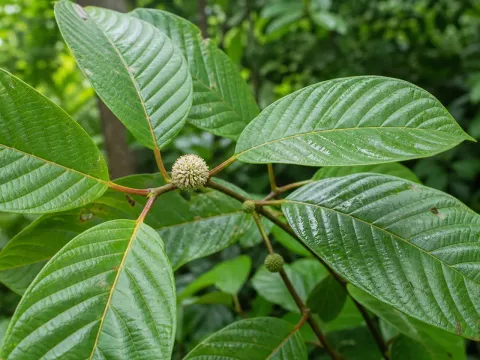
Botanically, the plant features large, dark green, ovate leaves and small yellowish flowers clustered in globose heads. While it can grow to significant heights in the wild, commercial producers maintain it as a shrub through regular pruning to optimize harvest density.
Sunlight requirements are substantial, but the plant benefits from dappled shade during its initial growth stages. Once established, it can tolerate full sun provided that soil moisture is carefully managed to prevent dehydration during extreme heat.
Common pests affecting this species include spider mites, which thrive in dry conditions and can cause significant leaf damage. Regular misting or the use of biological controls is recommended to maintain populations at manageable levels.
Mealybugs are another prevalent concern, often clustering on the undersides of leaves or along stem joints. They sap the plant's vitality and produce honeydew, which can further attract sooty mold, damaging the plant's aesthetic and physiological integrity.
Root rot is the most significant disease challenge, usually resulting from poor soil drainage or over-irrigation. It is imperative to monitor soil moisture content and ensure that the growing medium does not become anaerobic at the root level.
Fungal leaf spot diseases may appear during periods of high humidity and poor air circulation. Improving spacing between plants and utilizing fans in a greenhouse setting can effectively reduce the incidence of these pathogens.
Effective plant health management involves proactive monitoring and integrated pest management (IPM) techniques. Keeping the area free of organic debris helps prevent the accumulation of soil-borne pathogens that could compromise the health of the trees.