
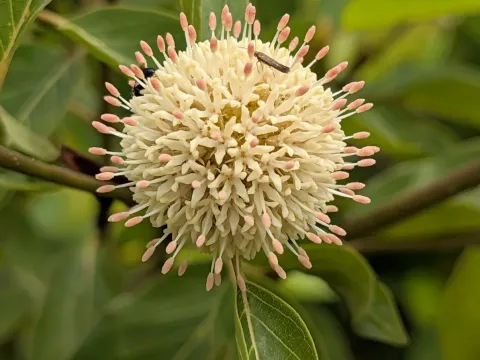
Mitragyna inermis
Mitragyna inermis
Mitragyna inermis is a perennial shrub or small tree belonging to the Rubiaceae family. Native to the tropical regions of West and Central Africa, it is widely recognized for its ability to thrive in wet, flood-prone environments.
What the section contains
Mitragyna inermis
The plant requires a tropical climate characterized by consistently high temperatures and significant annual rainfall. It is exceptionally resilient to waterlogging, making it a natural fit for riverbanks and marshy areas where other species might struggle.
Regarding soil requirements, Mitragyna inermis performs best in heavy clay or alluvial soils that maintain high moisture content. It is tolerant of a range of soil types, provided that the growing medium retains sufficient water during the active growing season.
Full solar exposure is highly recommended for the plant to achieve its maximum biomass potential. While young saplings are capable of surviving in partial shade, mature specimens require clear, open spaces to produce healthy foliage.
Agricultural management involves basic weeding and occasional pruning to encourage denser branching. Because the plant is naturally adapted to its niche, it requires minimal chemical intervention, which supports sustainable cultivation practices.
The economic value of Mitragyna inermis lies in its leaves and bark, which are utilized for their pharmacological properties and high tannin content. Harvesting is typically conducted by selecting mature, healthy leaves during the peak growth phases.
Post-harvest processing involves air-drying the collected material in shaded conditions. This slow drying process is crucial for preserving the chemical integrity of the active alkaloids and tannins found within the plant tissues.
Beyond medicinal uses, the durable wood of the tree is highly valued for tool-making and construction. It is naturally resistant to many wood-boring insects, making it a reliable resource in hot and humid climates.
Traditional applications also include the use of bark extracts as natural pigments for textiles and leather. This versatile utilization makes the plant an essential crop for local economies in its native range.
While the species is robust and generally resistant to pests and major diseases, sustainable harvesting practices are necessary to ensure the long-term health of the shrub populations in a controlled agricultural setting.