
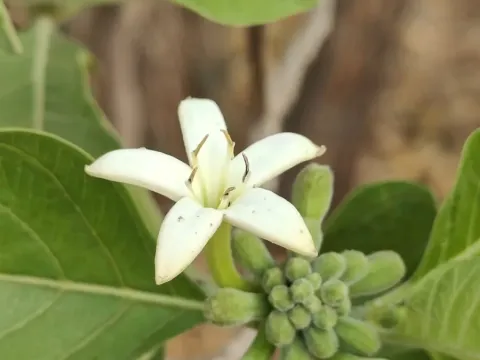
Morinda coreia
Morinda coreia
Morinda coreia is a significant woody plant species belonging to the Rubiaceae family. Native to the tropical regions of Asia, this plant is well-adapted to warm, humid environments and serves as a vital component in local ecosystems and traditional economies.
What the section contains
Morinda coreia
The plant thrives in regions with consistent rainfall and warm temperatures throughout the year. It exhibits an ability to adapt to various tropical forest soils, provided they offer adequate internal drainage to prevent root zone saturation.
Proper cultivation management requires maintaining an optimal balance of soil moisture. While mature plants are somewhat drought-tolerant, consistent water supply during early growth stages is essential for developing a strong root system.
Sunlight requirements for Morinda coreia are relatively high. While it may tolerate partial shade in its juvenile phase, full exposure to sunlight generally enhances the concentration of active secondary metabolites in the bark and roots.
From an agricultural standpoint, the plant is valued not only for its ecological role but also for its industrial potential, particularly in producing natural dyes and specific phytochemicals used in traditional medicine.
Harvesting Morinda coreia for industrial extraction typically occurs every few years to allow the plant to reach a sufficient level of maturity. This cycle is critical for maximizing the yield of bark and root extracts.
Methods of collection involve careful excavation of roots, usually timed to align with seasonal physiological dormancy to ensure higher concentrations of phytochemical compounds within the plant tissues.
Post-harvest processing involves washing the roots to remove debris, followed by precise drying techniques. Ensuring the moisture content is reduced to specific levels prevents degradation and maintains product quality.
The material is typically dried in shaded, ventilated areas to avoid direct UV damage, which could alter the composition of the valuable pigments contained within the woody parts.
Following drying, the harvest is processed into powders or extracts, which are then packaged according to industrial standards for distribution and international trade in the natural dye sector.