
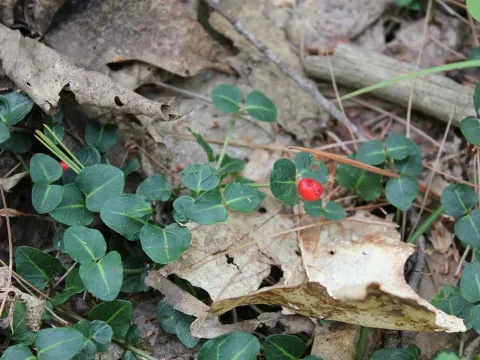
Mitchella
Mitchella
Propagation of Mitchella repens from seeds is a slow and demanding process, usually requiring stratification in cool conditions for several months before germination.
What the section contains


Mitchella
Vegetative propagation via cuttings or division of established mats is the preferred method for garden cultivation due to higher success rates.
The ideal time for planting out is early spring, ensuring that the young plants have the entire season to establish their root systems in the new location.
When propagating through cuttings, maintaining high humidity and filtered light is essential to prevent wilting and to encourage root development.
Space the plants according to the desired speed of coverage, bearing in mind that Mitchella is a slow-growing species compared to other groundcovers.
Mitchella, a member of the Rubiaceae family, is a woodland plant that thrives in acidic, humus-rich, and consistently moist soil.
It requires a shaded environment, ideally under the canopy of trees or in an area that receives only dappled sunlight throughout the day.
Temperature management is straightforward, as the plant is hardy, but it needs consistent moisture to survive periods of intense summer heat.
The soil should be well-drained but have excellent water-holding capacity, mimicking the natural composition of a forest floor.
Avoid heavy fertilizers; instead, rely on organic matter and compost to sustain the plant's health and maintain the necessary soil pH levels.
As a non-agricultural ornamental plant, Mitchella does not produce a harvestable yield in terms of food crops, but rather aesthetic value.
The yield of a planting effort is measured by the density and health of the groundcover mat that develops over time.
The plant is prized for its attractive, bright red berries that persist through the colder months, providing winter interest in a garden setting.
Although the berries are edible, they are mostly consumed by wildlife and do not serve a commercial purpose for human consumption.
Overall performance is judged by the plant's ability to create a thick, weed-suppressing carpet that maintains its green color throughout the season.
The primary threats to Mitchella are fungal pathogens caused by excessive moisture and poor air circulation within the leaf mat.
Slugs and snails are the most common pests, as they thrive in the same moist, shaded conditions that the plant requires for growth.
Exposure to direct sunlight is a significant threat, as it can quickly cause scorching and dehydration of the delicate evergreen foliage.
Improper soil pH can lead to nutrient deficiencies, manifesting as chlorosis, which significantly degrades the plant's visual appeal.
- Use organic snail baits to protect young growth.
- Improve air movement in greenhouse or dense garden settings.
- Apply mulch to retain soil moisture during heatwaves.
- Monitor for signs of root rot caused by poor drainage.