
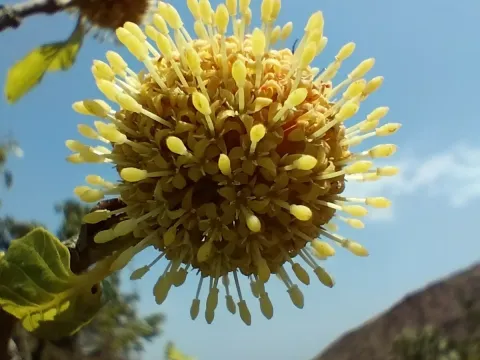
Mitragyna
Mitragyna
The propagation of Mitragyna in an agricultural setting primarily relies on seed sowing or vegetative cuttings. Given the seeds are minuscule and possess a very short viability period, they are sown immediately after harvest into a substrate rich in organic matter and well-draining soil to ensure maximum germination success.
What the section contains

Mitragyna
Maintaining high humidity, ideally near 100%, and a stable temperature between 25 and 30 degrees Celsius is critical for early seedling development. Since the seeds are light-dependent, they must be sown superficially on the substrate surface without deep burial.
Vegetative propagation via cuttings involves selecting semi-hardwood shoots from healthy mother plants. These are treated with rooting hormones and maintained in a propagation greenhouse with bottom heating, which significantly enhances the establishment of a robust root system during the first few weeks.
Once seedlings display several sets of true leaves, they are transferred to individual pots using a careful transplanting technique. The plant is extremely sensitive to root disturbance, so minimizing damage to the root ball is essential for preventing transplant shock and ensuring long-term vigor.
Hardening off the young plants is a necessary stage before final transplantation to the field. This process gradually exposes the seedlings to ambient conditions over several weeks, allowing them to adapt to the specific microclimate of the plantation area.
Mitragyna is a tropical tree belonging to the Rubiaceae family, inherently adapted to the humid lowland forests of Southeast Asia. Its cultivation requires a climate characterized by constant warmth and high atmospheric moisture, with no significant seasonal frost or extreme temperature drops.
The ideal soil profile consists of fertile, loamy, or clay-based soils that provide excellent moisture retention while remaining well-drained. The plant thrives in slightly acidic to neutral soil conditions, generally maintaining a pH level between 5.5 and 6.5 for optimal nutrient uptake.
Water management is the cornerstone of successful Mitragyna agronomy. The crop requires consistent irrigation to mimic the heavy rainfall of its native habitat; during drier months, supplemental irrigation through drip systems is necessary to maintain leaf quality and prevent water stress.
Regarding light, Mitragyna is semi-shade tolerant, especially during its juvenile stages. Direct exposure to intense tropical sunlight can lead to leaf scorching and increased transpiration, so establishing agroforestry systems with protective canopy cover is often beneficial for young plantations.
Soil fertility must be managed through periodic additions of organic mulch and compost. This practice not only provides essential nutrients but also helps maintain the high humidity and cool soil temperatures that these trees require for their metabolic processes.
The primary agricultural pests affecting Mitragyna plantations include spider mites and scale insects. These pests feed on the sap of tender leaves, causing discoloration, malformation, and premature senescence, which drastically reduces the commercial yield of the crop.
Fungal pathogens represent a significant threat, particularly in regions with heavy rainfall and poor air circulation. Diseases like leaf spot and root rot can quickly spread through a plantation, necessitating robust preventative strategies including proper plant spacing and sanitation.
Proactive monitoring of the canopy is essential for identifying pest infestations in their early stages. Implementing Integrated Pest Management (IPM) practices, such as the use of natural predators or botanical pesticides, helps control populations while minimizing the impact on the local ecosystem.
Nematodes are a subterranean threat that can devastate the root systems of trees grown in sandy or poorly managed soils. To combat these, growers utilize crop rotation and soil solarization prior to planting, ensuring that the ground is free of soil-borne pathogens.
The implementation of proper ventilation within the plantation layout is vital to reducing the micro-humidity levels that promote fungal outbreaks. Regular pruning of inner branches helps improve airflow, which acts as an effective non-chemical deterrent against many common pathogens.
Harvesting Mitragyna is a labor-intensive practice that typically begins when the tree reaches maturity, usually after two to three years of steady growth. Workers harvest mature leaves by hand, selecting specimens that are fully developed and contain the highest concentration of phytochemicals.
Sustainability is integrated into the harvest protocol by practicing rotational picking, where only a fraction of the foliage is removed from each tree during a single cycle. This method ensures that the tree retains sufficient canopy for continuous photosynthesis and rapid recovery.
Post-harvest processing involves cleaning the leaves and ensuring they are dried in a controlled, dark, and well-ventilated environment. Avoiding direct sunlight during the drying phase is crucial to preserve the integrity of the delicate chemical compounds within the plant tissues.
Precise monitoring of moisture content during the drying stage is required to reach the target level of approximately 10-12%. If the leaves are over-dried, they become brittle and lose quality; if under-dried, they risk developing mold during storage.
Once dried to the correct specifications, the product is packaged in airtight, UV-resistant materials. Proper storage in temperature-controlled warehouses prevents oxidation and ensures that the raw material remains in excellent condition until it reaches the final stage of the supply chain.