
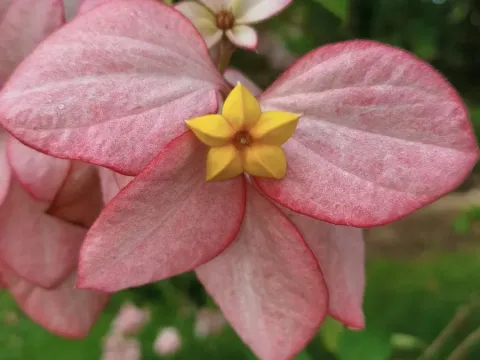
Mussaenda
Mussaenda L.
Mussaenda L. is a genus of flowering plants belonging to the Rubiaceae family. Native to tropical regions of Africa, Asia, and the Pacific, these shrubs are widely recognized for their showy, enlarged sepals that surround the small, inconspicuous true flowers.
What the section contains

Mussaenda
Agricultural success depends on providing a tropical climate with high ambient humidity and consistently warm temperatures, ideally between 22 and 30 degrees Celsius. The plants do not tolerate frost or cold drafts, which can cause significant physiological stress.
Soil requirements involve well-draining, acidic to neutral soil mixtures. Commercial cultivation typically utilizes a blend of peat moss, pine bark, and perlite to maintain structure and prevent root rot, which is a major risk in waterlogged conditions.
Cultural practices include regular pruning to maintain a dense, bushy form and promote more abundant flowering. Because the color is concentrated in the sepals, high light intensity is crucial to ensure vibrant coloration throughout the growing season.
In terms of agricultural utility, Mussaenda is primarily cultivated as a high-value ornamental shrub for landscaping in tropical urban environments. It serves as an important component in botanical gardens and upscale horticultural settings globally.
The primary pests affecting Mussaenda are spider mites, whiteflies, and aphids, which thrive in protected cultivation environments. Frequent scouting is required to prevent populations from reaching economic injury levels.
Disease management focuses on preventing root rot and fungal leaf spot infections. Maintaining proper airflow and adhering to careful irrigation schedules are the most effective non-chemical methods for protecting plant health.