
Kohautia amatymbica
Kohautia amatymbica
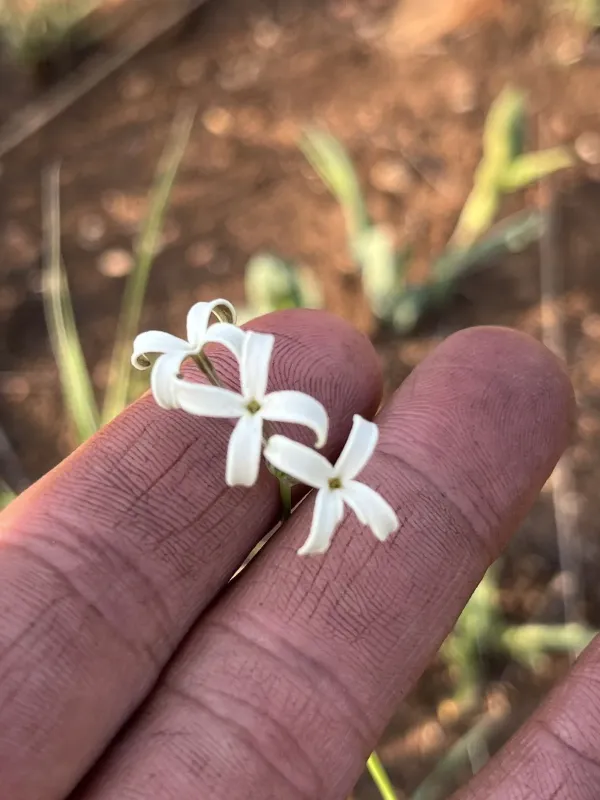
Description
Sowing dates
Sowing Kohautia amatymbica is best timed at the onset of the rainy season, which provides the necessary moisture for seed germination. In its native habitat, the plant is evolutionarily adapted to begin its growth cycle immediately following the dry season as temperatures stabilize.
For commercial cultivation, seed stratification may be required due to a natural dormancy phase common in savannah species. Seeds should be sown at a shallow depth of 1-2 centimeters, as they are minute and possess limited nutrient reserves for emergence.
A row-planting method is recommended to facilitate maintenance and ensure uniform light distribution across all plants. Seedlings typically emerge within 14 to 21 days provided that the soil moisture remains constant and environmental conditions are stable.
The plant shows vigorous growth in early stages, provided that competition from weeds is strictly controlled. Using a high-quality, humus-rich substrate during the initial weeks supports the formation of a robust root system, which is crucial for subsequent development.
In cooler regions, starting plants in greenhouses is a highly effective practice. Transplanting hardened seedlings into the field after the risk of frost has passed significantly enhances plant survival rates and overall field uniformity.
Growing requirements
Kohautia amatymbica belongs to the Rubiaceae family and is a perennial herb native to African grasslands and open woodlands. It requires well-lit areas with exposure to direct sunlight for the majority of the day to reach its full production potential.
Soil requirements center on excellent drainage, as the species is highly sensitive to waterlogging, which often leads to root rot. Sandy or loamy soils with a neutral to slightly acidic pH are ideal for healthy growth.
The plant is noted for its exceptional drought tolerance, a trait developed through its adaptation to the arid climates of Southern Africa. This resilience makes it an excellent candidate for cultivation in regions with sporadic rainfall patterns.
The optimal temperature range for active growth is between +20°C and +30°C. While the plant can survive minor temperature drops, heavy frosts may damage the foliage, necessitating protected cultivation or overwintering measures in colder zones.
Maintenance involves regular weeding and light aeration of the soil to support root respiration. Fertilization should be kept to a minimum, focusing on potassium-rich inputs to strengthen the plant's natural immunity against environmental stressors.
Main diseases and pests
The primary threat to Kohautia amatymbica is fungal infection, often triggered by excessive soil moisture or poor drainage. Root rot caused by pathogens can lead to the rapid decline of healthy plants if not managed through drainage improvements.
Pests, particularly aphids and various leaf-eating insects, can cause significant damage during the active growing season. Regular phytosanitary monitoring is recommended to catch outbreaks early and implement targeted control measures.
Nematodes may pose a problem in sandy soil types, potentially damaging the roots and reducing nutrient uptake. Implementing a proper crop rotation system is an effective cultural practice to mitigate the accumulation of soil-borne pests.
Powdery mildew may occur in environments with high humidity and poor air circulation. Proper spacing of the plants and regular thinning ensure adequate airflow, which serves as a highly effective preventive measure against fungal pathogens.
Avoiding the compaction of the topsoil layer is vital, as it ensures proper oxygen supply to the root zone. A healthy, aerated soil structure is the foundation for the plant's natural resilience against most common agricultural diseases.
Harvesting
The harvest of Kohautia amatymbica is best performed during the peak flowering stage, as this is when the concentration of bioactive compounds in the plant tissues is at its highest. This timing is critical for the production of high-quality medicinal material.
Harvesting involves cutting the stems at approximately 5-10 cm above the ground. Using sharp equipment is essential to avoid crushing the stem tissue, which helps keep the plant healthy and capable of regrowing for subsequent seasons.
Post-harvest, the plant material must be dried quickly in a shaded, well-ventilated area. Rapid drying is necessary to prevent spoilage and ensure that the delicate essential oils and chemical constituents are preserved.
The dried product should be stored in a cool, dark, and dry environment using airtight containers to maintain its potency. Proper storage allows the herbal raw material to remain effective for up to 18 months or longer.
The plant is widely used in traditional and modern herbal practices for its reported anti-inflammatory and antiseptic properties. It remains a valued crop for those involved in the production of specialized botanical extracts and natural remedies.