
Kohautia grandiflora
Kohautia grandiflora
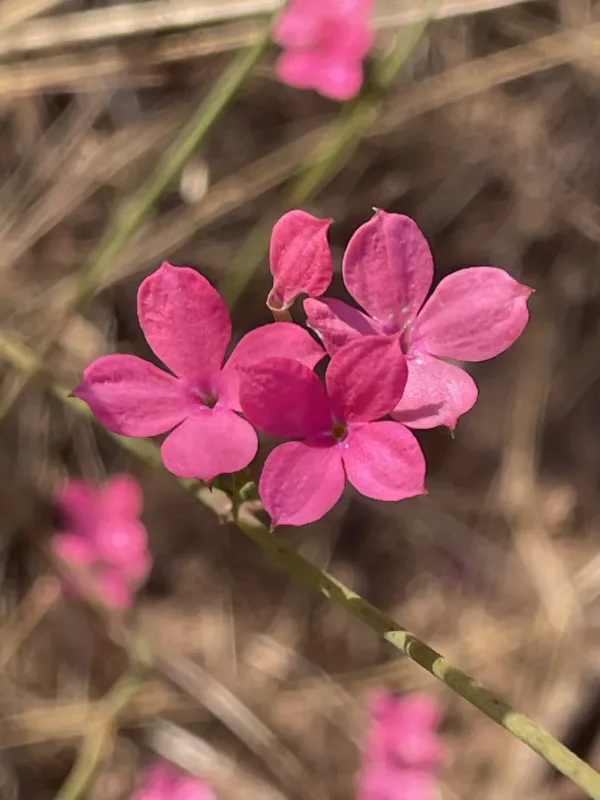
Description
Sowing dates
Sowing Kohautia grandiflora requires a well-prepared seedbed during the warm season. As a species native to tropical environments, it necessitates stable temperatures above 20 degrees Celsius to initiate successful germination and early seedling growth.
The seeds are small and should be sown at a shallow depth to ensure sufficient light exposure, which is vital for the germination process. Proper soil contact is maintained by light rolling after seeding, which helps in retaining the soil moisture necessary for the initial growth phase.
Row planting is the preferred method for commercial cultivation, allowing for efficient mechanical weed control between rows. This approach is essential during the early stages of development when the plants are less competitive against weeds and require space to establish their root systems.
Optimal sowing times should align with the onset of the stable warm season to avoid any risk of cold stress, which can severely hinder the development of the plants. If necessary, protective covers are used during the first few weeks to maintain an ideal microclimate for the seedlings.
Adequate spacing between rows is recommended to ensure proper airflow, reducing the risk of fungal diseases. A population density that is too high can lead to competition for nutrients and increased humidity, which might negatively affect the health of the crop.
Growing requirements
Kohautia grandiflora, a member of the Rubiaceae family, is well-adapted to the harsh conditions of African savannas and semi-arid regions. The plant thrives in environments characterized by high daytime temperatures and significant periods of moisture deficit.
The crop requires well-drained, light-textured soils such as sandy or sandy-loam types. Effective drainage is a critical requirement, as the root system is highly sensitive to waterlogging, which can quickly lead to plant mortality and susceptibility to soil-borne pathogens.
While the plant exhibits remarkable drought tolerance, supplemental irrigation during peak growth phases is beneficial for maximizing biomass production. Providing water during flowering periods ensures better plant development and higher yields of essential components.
The plant prefers neutral or slightly alkaline soil conditions. Proper soil fertility management, specifically the application of potassium-based fertilizers, promotes stem strength and improves the plant's natural resistance to environmental stressors throughout the growing season.
Full sun exposure is a fundamental requirement for the healthy development of Kohautia grandiflora. Any degree of shade can lead to stunted growth, reduced photosynthetic efficiency, and lower overall quality of the harvested botanical material.
Yield
The economic value of Kohautia grandiflora lies in its pharmacological and cosmetic potential. The aerial parts of the plant are rich in diverse secondary metabolites, including essential oils that are highly valued in traditional medicine and modern research.
Yield optimization is achieved by harvesting the plant at the onset of peak flowering. This is the stage when the concentration of bioactive compounds in the stems and leaves is highest, ensuring the maximum quality of the raw material for processing.
Productivity is significantly influenced by the level of crop management, particularly in regards to nutrient management and weed control. Consistent yields can be achieved in regions with appropriate climatic conditions when the crop is managed as a high-value botanical resource.
Harvested material must be dried immediately in a controlled environment to preserve the volatile compounds that define its quality. Proper storage conditions are necessary to maintain the integrity of the essential oils until the final extraction or processing stage.
Ongoing agricultural research aims to select more productive varieties of this crop. Improving its adaptation to different soil conditions and increasing its metabolite content remain key objectives for expanding its role in the global medicinal and aromatic plant market.
Main diseases and pests
Fungal infections, particularly root rot, are the primary threat to Kohautia grandiflora. These issues are almost always linked to poor drainage or overly wet soil conditions, which highlight the importance of site selection and careful water management in the field.
Pests such as aphids can cause damage by feeding on young foliage, which not only stunts growth but can also act as vectors for other infections. Regular scouting of the fields is essential to detect any early signs of infestation and to initiate effective control measures.
Crop rotation is a critical practice for managing soil health and preventing the buildup of host-specific pathogens. A cycle of at least three years between planting Kohautia on the same plot is recommended to maintain the long-term sustainability of the operation.
Weed competition poses a significant risk to productivity, especially during the slow early growth phase. Integrating mechanical and cultural control measures, such as mulching or timely inter-row cultivation, helps to mitigate the negative impact of weeds.
Preventative measures, including the use of certified healthy seeds and strict adherence to moisture requirements, are the most effective ways to manage threats. By minimizing plant stress, the risk of outbreaks of diseases and pests is significantly reduced.