
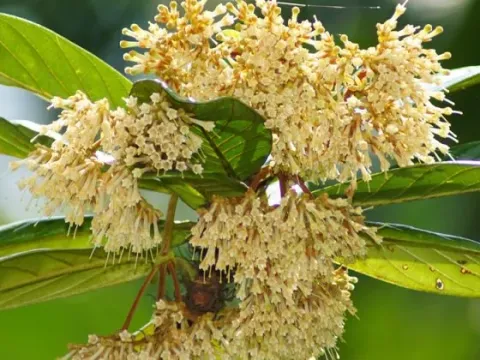
Jackiopsis
Jackiopsis
Jackiopsis (Jackiopsis ornata) is a monotypic genus of evergreen trees belonging to the Rubiaceae family. This species is native to the tropical rainforests of Southeast Asia, thriving in regions with high precipitation and stable warm temperatures.
What the section contains

Jackiopsis
The climate requirements for Jackiopsis are strict: it demands a humid, tropical environment without significant seasonal temperature drops. It is typically found in primary and secondary lowland forests where canopy cover provides protection from direct sun during the sapling stage.
Soil conditions are critical for the successful establishment of this crop. The species prefers deep, well-draining soils rich in organic matter. While it requires high moisture, it is highly sensitive to waterlogged conditions, which can lead to rapid root decay.
Agronomic practices for Jackiopsis focus on mimicking natural forest conditions. This involves low-intensity management, ensuring adequate space between trees to prevent nutrient competition and to allow for proper airflow to mitigate the risk of fungal infections.
In terms of хозяйственное (economic) use, Jackiopsis is primarily valued for its timber. The wood is dense and durable, making it suitable for high-quality construction and traditional woodworking, particularly in its native range of Sumatra, Borneo, and the Malay Peninsula.
The yield potential of Jackiopsis is measured by the timber production per hectare over a long-term harvesting cycle. As a slow-growing tree, its yield is cumulative, requiring patience and sustained forest management practices.
Optimal yields are achieved through professional silviculture, including the selection of superior genetic stocks for planting. This ensures that trees reach harvestable dimensions with high-quality, straight-grained wood.
Thinning operations are essential for maximizing growth rates. By removing suppressed or defective individuals, growers can concentrate resources on the most vigorous specimens, thereby increasing the total volume of marketable timber.
Productivity also depends on soil health. Sustaining organic carbon levels and proper moisture cycling in the plantation environment are vital for the long-term viability of the crop.
Harvesting efficiency is tied to the age of the stand. While individual trees can grow to significant sizes, the peak economic value is typically reached when the wood density is at its maximum and internal rot is absent.
Diseases in Jackiopsis are largely associated with tropical pathogens that thrive in humid environments. Root rot caused by soil-borne fungi is a common threat, particularly in areas where drainage is insufficient.
Insects, particularly wood-boring beetles, pose a major risk to the timber quality. These pests drill into the trunks, creating galleries that compromise the structural integrity of the wood and invite secondary bacterial or fungal infections.
Leaf blight and various rusts can impact the vitality of the canopy, especially in nurseries or high-density young plantations. Proper spacing and removal of infected debris are fundamental in controlling these outbreaks.
Wildlife and rodent damage to bark can open pathways for pathogens. Protective measures, such as mechanical guards on young stems, are often necessary in high-risk areas to ensure the tree maintains its health until harvest.
Sustainable pest management (IPM) is recommended to protect the ecosystem. By fostering biodiversity within the plantation, natural predators of wood-boring insects can keep pest populations below the economic damage threshold.