
Kohautia lasiocarpa
Kohautia lasiocarpa
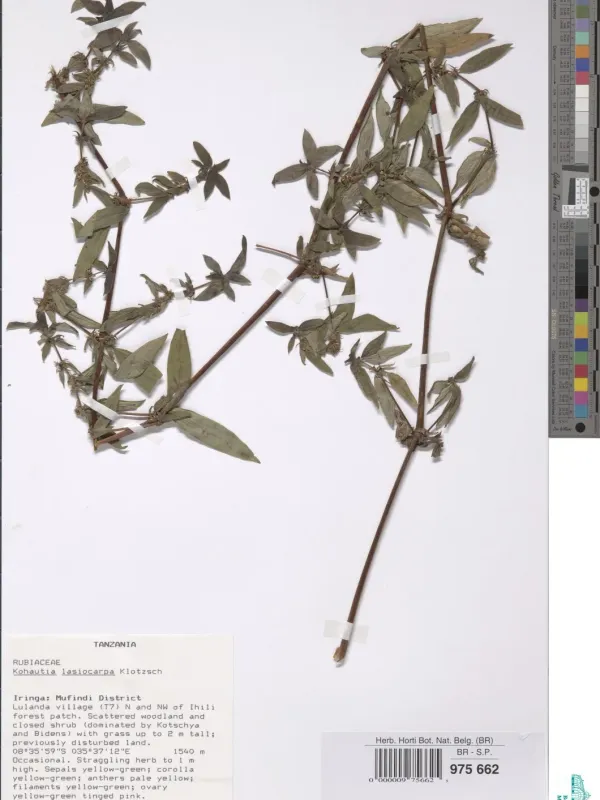
Description
Growing requirements
Kohautia lasiocarpa is a herbaceous species belonging to the family Rubiaceae. Native to the arid and semi-arid regions of Africa, this plant has evolved to thrive in environments where water scarcity is the primary limiting factor for vegetation growth.
The crop thrives in well-drained, sandy or light loamy soils. It demonstrates remarkable drought resistance, utilizing its deep root system to access moisture deep within the soil profile, which is a critical adaptation for survival in tropical savanna climates.
Optimal cultivation requires full sun exposure and warm temperatures throughout the growing cycle. From an agronomic standpoint, soil structure is paramount, as the species is highly susceptible to root rot if exposed to waterlogged or poorly aerated substrate conditions.
Botanically, the plant is characterized by its distinct pubescent foliage and stems, features that reduce transpirational water loss. These adaptations allow the plant to maintain metabolic functions even under high heat stress, making it an excellent subject for climate-resilient research.
The primary economic use of Kohautia lasiocarpa relates to its role in livestock grazing systems. It is considered a nutritious forage plant in its native range, supporting herbivore populations during dry seasons when other fodder sources are depleted. Further research is ongoing regarding its potential secondary metabolites.