
Kohautia virgata
Kohautia virgata
Description
Growing requirements
Kohautia virgata is a notable species within the Rubiaceae family, widely recognized for its resilience in arid and semi-arid environments. It originates from tropical regions where it functions as a critical component of the local ecosystem, thriving in sunny, open spaces with minimal competition from taller woody vegetation.
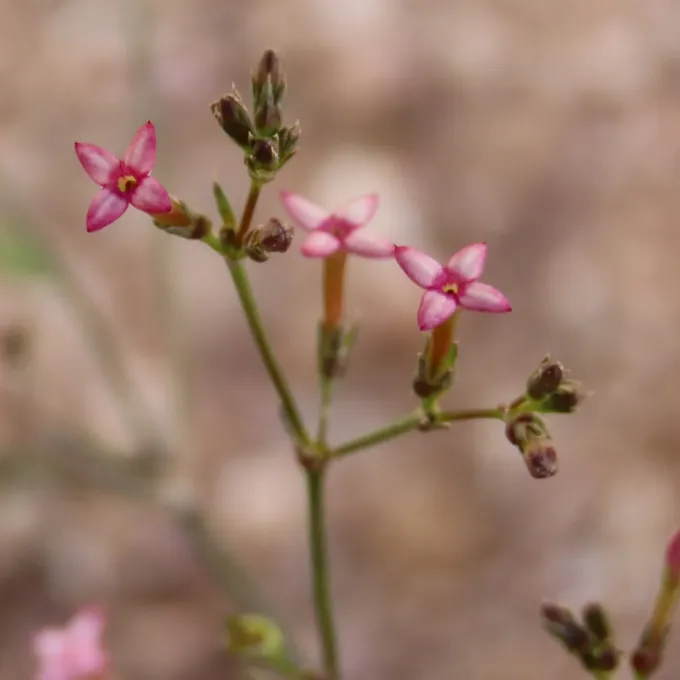
The plant exhibits a characteristic thin, rod-like stem structure, which gives rise to its specific epithet. Its leaves are typically linear to lanceolate, and its inflorescences produce small, often fragrant flowers that play a significant role in supporting local biodiversity and pollinator networks.
Regarding soil requirements, Kohautia virgata prefers sandy or light loamy substrates that facilitate excellent drainage. The species is highly sensitive to waterlogging, making soil aeration and structure primary factors in selecting an appropriate cultivation site for optimal yield.
Climate adaptation is a core strength of this plant, as it is evolved to withstand high temperatures and intense solar radiation. Consistent warmth is required for seed germination, and the plant maintains active growth during periods of moderate moisture availability, showcasing its specialized physiological pathways.
Agronomic management for this crop relies on precision planting depth and early-stage weed management. Due to the small size of the seeds, surface or shallow sowing is recommended, followed by light irrigation to ensure soil-to-seed contact and successful establishment of the crop in the field.