
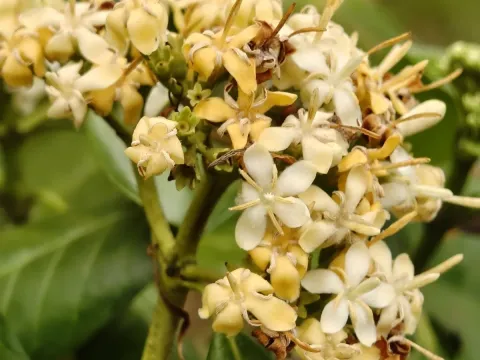
Tarenna
Tarenna
Tarenna is a significant genus of flowering plants belonging to the Rubiaceae family, which also includes coffee and gardenia. It consists of over 200 species of evergreen shrubs and small trees that are natively found in tropical and subtropical regions across Africa, Asia, and the Pacific islands.
What the section contains


Tarenna
The botanical characteristics of these plants include opposite leaves with a leathery texture and prominent stipules. The flowers, which are the main aesthetic highlight, are typically produced in terminal or axillary corymbs and are known for their distinct fragrance, which is highly appreciated in garden settings.
Regarding growing conditions, Tarenna thrives in environments with high humidity and consistent, warm tropical temperatures. They require well-drained, nutrient-rich soil to establish a strong root system, and they perform best in light shade, which mimics the environment of their natural forest habitats.
Cultivation practices involve protecting the plants from frost and extreme heat, which can lead to leaf scorching and tissue damage. Regular irrigation is crucial, especially during the dry season, to ensure the plant maintains its evergreen foliage and continues the flowering process throughout the year.
The primary utility of the Tarenna genus lies in its ornamental value in tropical landscaping and indoor gardening. Furthermore, in various traditional cultures within their native range, several species have been historically studied or used for their potential medicinal properties, though commercial application remains limited.