
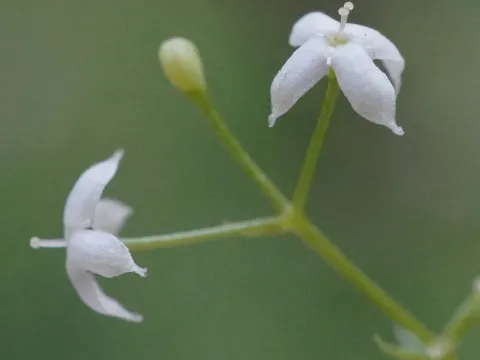
Sweetscented bedstraw
Galium meliodorum
Sweetscented bedstraw (Galium odoratum), a member of the Rubiaceae family, is a perennial herb often grown for its aromatic properties and medicinal value.
What the section contains
Sweetscented bedstraw
Propagation is primarily achieved through division of the rhizomes in early spring or autumn, which allows for rapid establishment and consistent crop quality.
For seed sowing, stratification is required, making late autumn the ideal time for sowing directly into the soil or in containers to mimic natural winter cooling.
Plants should be spaced 25 to 30 centimeters apart to encourage the formation of a dense ground cover, which helps suppress weed growth effectively.
Selecting the right site is crucial: this plant thrives in shady or semi-shady locations, replicating the conditions of its native deciduous forest habitat.
The crop requires moist, humus-rich, and slightly acidic soil with excellent drainage to ensure healthy root development throughout the growing season.
Temperature management is key; the plant prefers cool, temperate climates and avoids direct sunlight, which can cause foliage desiccation during summer months.
Maintaining soil moisture is essential for success, and the use of organic mulch, such as leaf mold or bark, can replicate the forest floor environment.
It exhibits high winter hardiness, making it a reliable perennial in colder climates, capable of surviving harsh winters without specific protective measures.
Nutrient requirements are modest; organic amendments like compost are preferred to maintain soil structure and support the plant's natural vigor.
The yield of green biomass depends on plantation density and maintenance; optimal production is usually achieved from the second year of cultivation onwards.
Harvesting timing is focused on the flowering stage, where the accumulation of coumarin—the compound responsible for the plant's characteristic scent—is at its highest.
The commercial applications are diverse, ranging from the pharmaceutical industry to the production of essential oils and flavourings for the food industry.
With proper care and weed management, a sweetscented bedstraw plot can remain productive for up to seven years before needing renewal or soil refreshment.
Economic output is heavily dependent on the drying process, as high-quality dried biomass retains the most significant market value for culinary and medicinal uses.
Sweetscented bedstraw is relatively resistant to many pests due to its secondary metabolites, which serve as natural deterrents against herbivorous insects.
Fungal diseases, specifically root rots and leaf spots, can occur if the soil remains waterlogged or if there is insufficient air circulation between the plants.
Slugs and snails may occasionally feed on the tender young leaves, particularly in damp and shaded conditions, requiring proactive management strategies.
Maintaining proper spacing and ensuring the soil is not overly compacted are the best preventative measures against most common pathological issues.
Regular inspection of the plantation helps to identify early signs of stress, allowing for targeted organic treatments that do not compromise the crop's quality.
Harvesting generally takes place in late spring or early summer, timed precisely with the plant's peak flowering phase to ensure the best chemical profile.
Stems are cut several centimeters above the soil line using sharp tools to avoid damaging the rhizomes, ensuring the plant can regenerate for future cuts.
Drying must be conducted in a dark, well-ventilated space, as direct UV light exposure can degrade the aromatic compounds responsible for the plant's value.
Dried material should be stored in airtight containers to preserve the coumarin scent, which becomes more potent and pleasant after the drying process is complete.
Quality control during the harvest involves removing any discoloured leaves and foreign matter to meet the requirements of pharmaceutical or industrial processors.