
Tarenna
Tarenna J. Gaertner.
Tarenna (Tarenna) is a genus of evergreen shrubs and small trees belonging to the Rubiaceae family. These plants are native to tropical and subtropical regions across Africa, Asia, and Australia, flourishing in warm and humid environments.
What the section contains

Tarenna
The cultivation of Tarenna requires a climate with consistent temperatures and protection from cold snaps. As a tropical plant, it thrives best in environments where moisture levels are high and the temperature does not drop below freezing, making it ideal for tropical gardening.
Soil requirements focus on well-draining, nutrient-rich substrates, ideally with a slightly acidic pH. Proper drainage is essential, as the roots are susceptible to rotting if left in waterlogged conditions, requiring careful moisture management during the growing season.
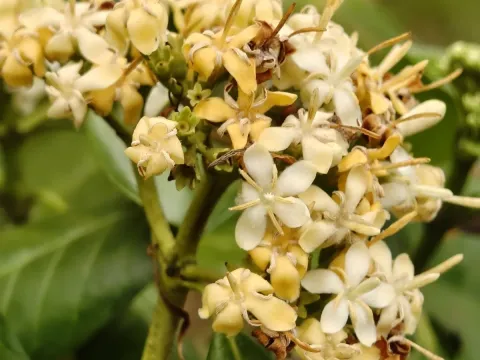
Botanically, Tarenna is defined by its opposite, often leathery leaves and terminal inflorescences of small, fragrant flowers. These flowers typically feature a tubular corolla with stamens protruding, which adds to their ornamental value in garden settings.
The primary use of Tarenna species is in ornamental horticulture. Due to their dense foliage and attractive, fragrant blossoms, they are often planted as hedges, foundation shrubs, or specimen plants in tropical landscape design projects.
Common pests affecting Tarenna include scale insects and mealybugs, which tend to infest the undersides of leaves and young stems. These pests can weaken the plant by extracting nutrients, potentially leading to stunted growth if not managed promptly.
Fungal issues, such as leaf spot or powdery mildew, can occur in stagnant or overly humid conditions. Maintenance strategies should emphasize good airflow around the canopy and consistent monitoring to ensure early detection and treatment of potential infestations.