
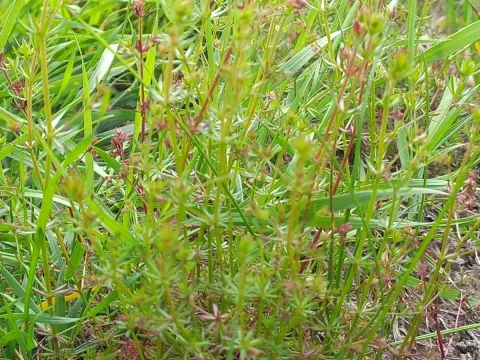
Slender bedstraw
Galium divaricatum
Slender bedstraw (Galium divaricatum) is an annual herbaceous plant belonging to the Rubiaceae family. In agricultural practice, it is recognized for its unique chemical profile and its potential applications in medicinal and botanical industries.
What the section contains
Slender bedstraw
Originating from the Mediterranean region, this plant has adapted to various temperate climates. It thrives in open, sunny environments and exhibits notable resilience to varying levels of precipitation, provided the soil drainage remains adequate.
The plant prefers light, sandy, or loamy soil types with a neutral pH level. Proper site preparation is essential to prevent waterlogging, as the species is highly sensitive to excessive soil moisture, especially during the early germination stages.
Botanically, it is characterized by branched stems and whorled leaves, leading to the development of delicate, small-flowered inflorescences. Its lifecycle is strictly annual, making its reproductive success dependent on efficient seed dispersal and germination cycles.
Agrotechnical management involves regular soil aeration and weed control to ensure optimal nutrient availability. Minimal fertilization is generally sufficient to support healthy biomass production, provided the planting density is carefully monitored.
The primary threats to Galium divaricatum include fungal diseases such as root rot and stem blight, particularly in high-humidity seasons. Maintaining clear spacing between plants is crucial to improve air circulation and mitigate these fungal risks.
Common pests include aphids and various leaf-feeding insects which can cause significant damage during the active vegetative growth phase. Integrated pest management, including the use of neem oil or natural predators, is recommended to protect the crops effectively.