
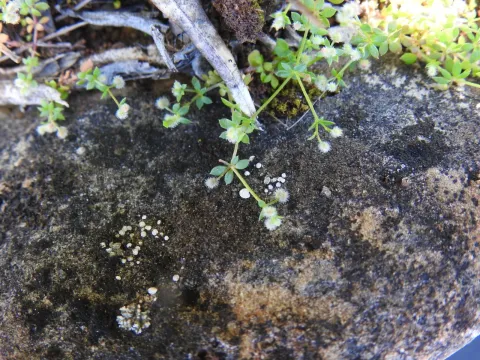
Small bedstraw
Galium minutulum
Small bedstraw (Galium minutulum) is an annual plant belonging to the Rubiaceae family. While it is often found in wild habitats, its agricultural potential lies in its ability to adapt to diverse ecological conditions, making it a subject of interest for specialized forage research.
What the section contains
Small bedstraw
The plant thrives in well-drained, neutral, or slightly alkaline soils. It performs best in areas with sandy loam textures that prevent root suffocation while maintaining sufficient nutrient availability for consistent vegetative growth.
Climate-wise, Galium minutulum prefers open environments with full sun exposure. It has moderate requirements for precipitation and can withstand intermittent dry spells, though consistent moisture during the initial growth stages is critical for establishment.
Agricultural management requires meticulous weed control to minimize competition for nutrients during the early phenological phases. Proper spacing between rows is recommended to allow for adequate ventilation, which is vital for plant health.
Fertilization regimes should focus on providing a balanced N-P-K ratio. Supplemental fertilization is particularly effective when applied before the flowering phase to support the overall biomass accumulation of the crop.
Fungal pathogens represent the most significant threat to the cultivation of Galium minutulum. Specifically, powdery mildew and various leaf spot diseases can spread rapidly in dense, poorly ventilated stands, severely impacting overall yield quality.
Insect pests such as aphids and small beetles can cause damage by feeding on stems and leaves. Such infestations not only reduce the aesthetic and market quality of the harvest but can also act as vectors for secondary viral infections.
Management of these threats involves a combination of mechanical weed removal to increase airflow and targeted fungicide applications when disease pressure exceeds economic thresholds. Crop rotation is essential to prevent soil-borne pathogen buildup.
Early diagnosis is the key to minimizing losses. Agronomists should routinely monitor fields for signs of wilting, discoloration, or the presence of insect eggs on the foliage, ensuring that interventions are both timely and precise.
Sustainable agricultural practices, including the use of resistant varieties or biopesticides, are increasingly encouraged. Balancing chemical use with integrated pest management (IPM) strategies ensures the long-term viability of the production plot.