
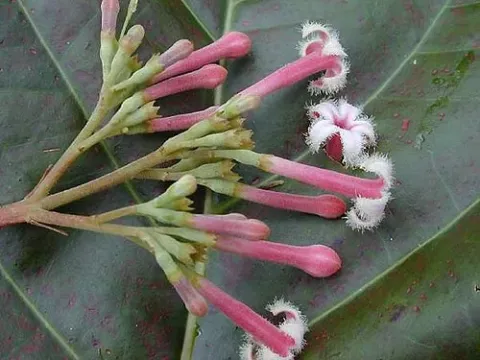
Small-flowered Cinchona
Cinchona micrantha
Small-flowered Cinchona (Cinchona micrantha) is an evergreen tree belonging to the Rubiaceae family. Native to the Andean regions, it is cultivated primarily for its medicinal bark.
What the section contains
Small-flowered Cinchona
The plant thrives in tropical montane climates, requiring high atmospheric humidity and constant temperatures ranging between 16 and 22 degrees Celsius throughout the year.
It prefers deep, well-drained, acidic soils with a pH between 4.5 and 6.0. Proper soil structure is essential to prevent waterlogging, which the species cannot tolerate.
The tree requires significant rainfall, ideally between 2000 and 3000 mm annually, and flourishes in misty environments at high elevations, typically between 1500 and 2800 meters.
Successful management involves regular maintenance of organic mulch around the root zone, which helps retain soil moisture and stabilizes the temperature of the root system.
The primary threats to Cinchona plantations include fungal diseases such as Armillaria root rot, which can cause rapid decline in tree health.
Pests, particularly aphids, scales, and various types of defoliating caterpillars, can severely impact plant vigor and limit the growth of young saplings.
Management strategies involve rigorous inspection and the application of integrated pest management (IPM) practices to minimize chemical use near the bark.
Environmental stress, such as prolonged drought or intense direct sunlight, can predispose the tree to various opportunistic bacterial infections.
Cultural practices such as proper spacing and thinning are vital to ensure adequate air circulation within the plantation and reduce the spread of pathogens.
The economic value of Cinchona micrantha lies in the bark, which serves as a major natural source of quinine, an alkaloid used to treat malaria.
Harvesting is typically performed on trees that have reached maturity, usually 8 to 12 years after planting, when the concentration of alkaloids is at its peak.
Techniques include harvesting the bark by peeling strips from the trunk or felling the tree entirely and processing the bark from both the trunk and branches.
Post-harvest processing involves air-drying the bark in shaded areas to prevent the degradation of heat-sensitive chemical compounds by ultraviolet light.
Once dried, the bark is processed, packaged, and shipped to pharmaceutical facilities for extraction, where it undergoes refining to produce standardized quinine salts.