
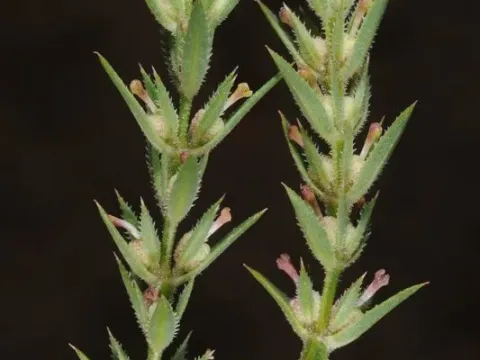
Sinai bedstraw
Galium sinaicum
Sinai bedstraw (Galium sinaicum) belongs to the Rubiaceae family. This perennial plant is highly specialized for arid, high-altitude environments, primarily endemic to the mountainous regions of the Sinai Peninsula and surrounding desert territories.
What the section contains
Sinai bedstraw
The botanical architecture of the plant is optimized for water retention, featuring dense leaf whorls and a specialized pubescence that protects the epidermis from intense solar UV radiation and high evapotranspiration rates common in desert climates.
Regarding soil requirements, the plant thrives in skeletal, alkaline, and well-drained limestone soils. Its deep root system is capable of penetrating rock fissures, which is essential for capturing scarce moisture in hyper-arid landscapes.
The climate requirements include high light intensity and thermal stability. Although the plant is cold-hardy during desert winters, it is fundamentally a heat-tolerant species that requires low relative humidity to prevent fungal infections.
Agricultural and scientific interest in this species lies in its secondary metabolites. Research into the chemical composition of Galium sinaicum suggests potential applications in ethnopharmacology, though systematic cultivation remains limited to experimental conservation projects.
The primary threats to Galium sinaicum are habitat fragmentation due to industrial development and road construction in the Sinai mountains, which isolate sub-populations and reduce gene flow.
Overgrazing by livestock represents a significant pressure on the biomass of the plant, as it is often grazed alongside other mountain flora during periods of extreme drought, preventing the plant from completing its life cycle.
Pathogenic challenges include localized fungal outbreaks in the stems, which typically occur if the microclimate becomes unusually humid or if irrigation protocols are improperly applied in controlled environments.
Pest populations, including specific beetles and mites, can cause damage to the foliage, which weakens the plant's ability to store resources for the dormant season, potentially leading to increased mortality rates during prolonged dry spells.
Conservation strategies focus on protecting these habitats from human encroachment and invasive species that may occupy the niche vacated by native desert plants due to environmental stressors, ensuring the long-term survival of the species.