
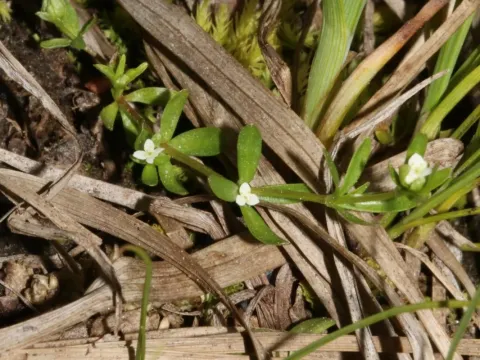
Small bedstraw
Galium trifidum
Small bedstraw (Galium trifidum) is a perennial herbaceous plant belonging to the Rubiaceae family. It is naturally adapted to moist environments, frequently colonizing marshy meadows, pond edges, and damp woodland habitats where water availability is consistent throughout the growing season.
What the section contains
Small bedstraw
Botanically, this species is defined by its slender, weak stems that rely on adjacent vegetation for support. The leaves are typically arranged in whorls, a characteristic feature of the genus, and the plant spreads through delicate rhizomes that form dense mats under favorable moisture conditions.
The cultivation requirements for this plant are centered on maintaining high soil moisture levels. It thrives in soils rich in organic matter and does not tolerate drought. Ideally, the plant prefers sites with a neutral to slightly acidic pH level, which mimics its natural wetland ecosystem.
Agronomic management involves selecting areas with partial shade, as the plant is sensitive to intense heat and direct sunlight. Ensuring consistent irrigation or proximity to a water source is essential for the plant to achieve its potential vegetative biomass for potential harvesting purposes.
As a specialized crop, it is often grown in controlled environments or restored wetland areas. Its role is primarily botanical and medicinal, requiring a deep understanding of its hydro-ecological needs to prevent dehydration and ensure the plant maintains its structural integrity and vitality.
The primary threats to Galium trifidum include fungal pathogens such as powdery mildew, which thrive in stagnant, high-humidity environments. Implementing appropriate spacing and ensuring slight airflow between plants is crucial to reducing the risk of rapid fungal infection during humid periods.
Common pests include aphids and terrestrial mollusks like slugs and snails, which can cause significant damage to the plant's delicate foliage. Integrated pest management strategies, focusing on biological controls, are typically employed to protect the crop without compromising the quality of the raw material.