
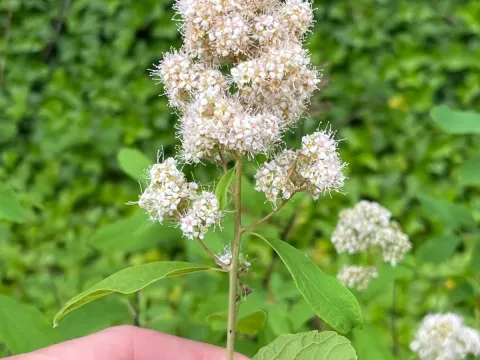
Spiraea pyramidata
Spiraea pyramidata
Spiraea pyramidata, commonly known as the pyramidal spirea, is a distinct shrub belonging to the Rosaceae family. It is recognized as a natural hybrid, specifically resulting from the cross between Spiraea alba and Spiraea douglasii, inheriting unique aesthetic and physiological traits from both parent species.
What the section contains
Spiraea pyramidata
Originating from the Northwestern United States, this shrub thrives in diverse environments, often found in moist meadows, riparian zones, and forest clearings. Its native habitat preference indicates a need for consistent moisture levels, though it displays remarkable adaptability to various soil structures once established.
Botanically, the plant features upright, woody stems and lanceolate, serrated leaves that turn aesthetically pleasing colors in late autumn. The primary identification feature is the inflorescence: dense, terminal panicles shaped like pyramids, bearing numerous small, pinkish-white flowers throughout the mid-summer season.
For optimal growth, Spiraea pyramidata requires full sun exposure to ensure robust floral development and dense canopy structure. While it tolerates partial shade, excessive lack of light will result in leggy growth and significantly reduced flowering, which limits its ornamental value in landscaping projects.
Economically, this species is highly valued in horticulture and environmental restoration. Its dense root system makes it an excellent choice for stabilizing soil on slopes, while its aesthetic appeal makes it a staple for mass planting, perennial garden borders, and creating naturalized hedges in public parks.
The plant is generally resilient, yet it remains susceptible to common fungal issues like powdery mildew, particularly in environments with poor air circulation or high humidity. Maintaining proper spacing during planting and performing annual thinning cuts are essential cultural practices to prevent disease outbreaks.
Common insect pests include aphids and various leaf-tier moths, which can cause cosmetic damage during the active growing season. Integrated pest management, focusing on early detection and the use of insecticidal soaps or targeted horticultural oils, is usually sufficient to maintain plant health throughout the season.