
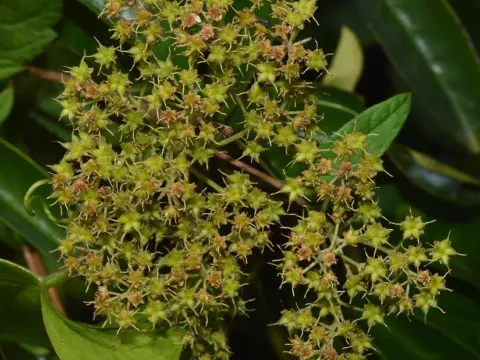
Spiraea micrantha
Spiraea micrantha
Spiraea micrantha is an ornamental shrub belonging to the Rosaceae family. It is widely recognized for its delicate foliage and clusters of small flowers, making it a highly desirable choice for garden borders and public landscaping.
What the section contains
Spiraea micrantha
The species originates from the mountainous regions of Eastern Asia. This geographic background suggests the plant is adapted to cooler climates and well-drained slopes, which gardeners should replicate for optimal growth.
This crop thrives in well-exposed locations with full sun to partial shade. Exposure to sufficient sunlight is critical for promoting intense blooming cycles and maintaining a dense, bushy appearance of the shrub.
The ideal soil for this species is fertile, loamy, and well-aerated. While it can adapt to various soil types, providing high levels of organic matter and ensuring excellent drainage is essential to prevent root rot.
In terms of climate, Spiraea micrantha demonstrates strong resilience to seasonal changes. However, mulch application is recommended during winter months to protect the root zone from rapid temperature fluctuations in colder zones.
Powdery mildew is the most frequent fungal issue encountered in humid environments. It appears as a white, dusty layer on leaves, which can be mitigated by ensuring adequate airflow between plants and applying systemic fungicides.
Aphids are the primary pests affecting young, succulent growth during the early spring season. Regular monitoring and the application of insecticidal soaps can manage these infestations before they impact the plant's health.
Spider mites may occasionally occur, particularly during hot and dry weather. These pests cause yellowing and stippling of the leaves, which requires the use of appropriate acaricides to prevent further damage.
Proper pruning is vital for disease management. Removing congested branches enhances ventilation within the plant, significantly reducing the habitat available for fungal pathogens and pests.
Finally, a balanced nutrient program supports plant vigor. Avoiding excessive nitrogen fertilization helps keep the plant tissues firm, making them less susceptible to mechanical damage and secondary pest attacks.