
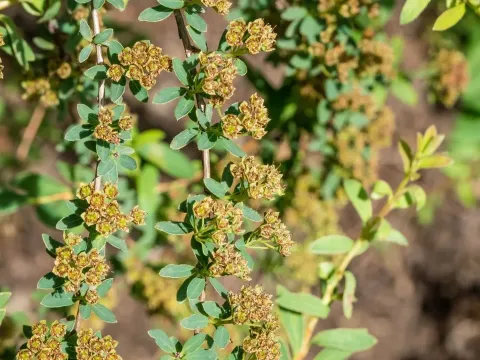
Spiraea mollifolia
Spiraea mollifolia
Spiraea mollifolia is a perennial deciduous shrub belonging to the Rosaceae family. Native to the mountainous regions of China, this species is naturally adapted to open slopes and forest margins, where it receives ample sunlight and well-drained substrate.
What the section contains
Spiraea mollifolia
Botanically, the shrub is distinguished by the soft, fine pubescence covering its young shoots and foliage, which gives the plant its specific name. It produces elegant, dense corymbose inflorescences that bloom during the spring and early summer seasons.
For optimal growth, this plant requires well-drained, fertile soil with a neutral to slightly acidic pH. Proper drainage is critical, as the root system is susceptible to decay if exposed to persistent waterlogging, especially during the dormant season.
The climate requirements include a preference for temperate conditions. While Spiraea mollifolia is known for its winter hardiness, it performs best when protected from extreme, drying winds and excessive moisture during the hottest months of the year.
In terms of agricultural and horticultural use, the plant is valued for its ornamental properties. It is a popular choice for landscape architecture, particularly for creating naturalistic hedges, decorative borders, and as a highlight plant in mixed garden beds.
Common pests that can affect Spiraea mollifolia include aphids and spider mites, which tend to infest the plant during hot, dry spells. Regular monitoring and the application of appropriate acaricides or insecticidal soaps can help manage these populations effectively.
Fungal diseases, most notably powdery mildew, can manifest if air circulation is poor or if humidity levels remain high for extended periods. Pruning the shrub to ensure adequate airflow and applying preventative fungicide sprays are standard management practices.