
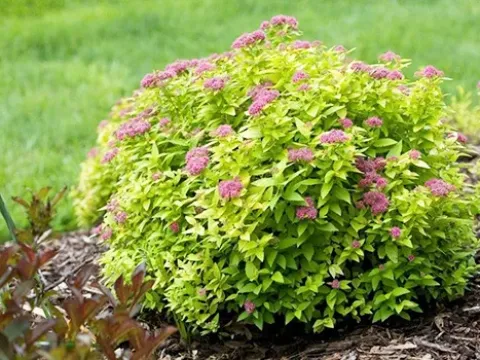
Spiraea hybrid
Spiraea hybrids
Spiraea hybrids belong to the Rosaceae family. This ornamental perennial is primarily propagated through vegetative methods such as cuttings, division of the root system, or layering.
What the section contains
Spiraea hybrid
Container-grown seedlings can be planted throughout the growing season, from April to October. However, spring or early autumn is considered the optimal window for root establishment in open ground.
Seed propagation is rarely used for hybrids because the offspring often fail to inherit the desirable characteristics of the parent plant, making vegetative methods the standard.
Site preparation involves deep soil cultivation and the application of organic matter. Planting holes should be at least 25-30% larger than the root ball to encourage rapid root expansion.
Post-planting care includes thorough irrigation and the application of mulch, such as peat or wood chips, to retain soil moisture and suppress competition from weeds.
These plants prefer sunny locations to ensure abundant flowering and dense foliage. While some hybrids can tolerate partial shade, their flowering density typically decreases significantly in low-light conditions.
Spiraea is adaptable to various soil types but thrives best in moderately fertile, well-drained loamy soils with a slightly acidic to neutral pH balance.
Proper drainage is critical, as stagnant water can lead to root rot. If the soil is heavy clay, a gravel or crushed brick drainage layer should be placed at the bottom of the planting hole.
The plants are generally cold-hardy and well-suited for temperate climates. In particularly harsh, snowless winters, young shrubs may benefit from protective covering at the base.
Routine pruning is a staple of spiraea management: spring-blooming varieties should be pruned immediately after flowering, while summer-blooming types are pruned in early spring to encourage vigorous new growth.
Spiraea hybrids possess moderate resistance to diseases but are susceptible to common pests and pathogens that affect the Rosaceae family when maintained poorly.
Major pests include aphids, spider mites, and leaf rollers. In cases of significant infestation, the application of appropriate insecticides or acaricides is recommended to prevent structural damage.
Powdery mildew is a common fungal issue that manifests as a white coating on foliage during periods of high humidity. Effective control involves fungicide application and improving air circulation.
Leaf spot can occur when watering practices lead to overly moist foliage or when density within the shrub prevents adequate airflow. Regular thinning cuts serve as an excellent preventive measure.
Integrated pest management should be practiced, ensuring that chemical treatments are applied according to label directions to avoid phytotoxicity and protect beneficial insects.