
Spiraea decumbens
Spiraea decumbens
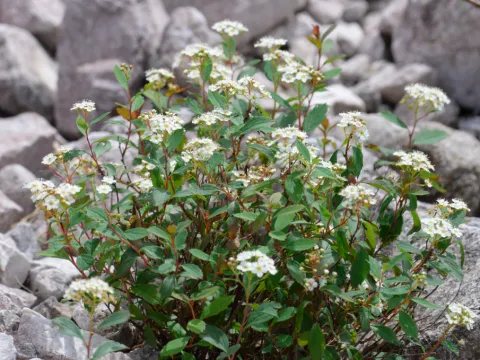
Spiraea decumbens, commonly known as creeping spirea, is a dwarf deciduous shrub belonging to the Rosaceae family. Native to the mountainous regions of Southern Europe, it is well-adapted to limestone outcrops and rocky environments, making it an excellent candidate for specialized landscaping.
What the section contains
Spiraea decumbens
The plant features low, prostrate stems that typically reach a height of only 20 to 30 centimeters, spreading horizontally to create dense ground cover. Its leaves are small and elliptical, and in early summer, the shrub produces attractive white flower clusters that provide a striking contrast against the foliage.
Optimal growth conditions for Spiraea decumbens require well-draining, slightly alkaline or neutral soil. Because of its origin on cliffs and hillsides, the plant is intolerant to waterlogged conditions, making proper drainage the most important factor in its cultivation to prevent root health issues.
This species is highly valued for its hardiness and ability to thrive in sunny, exposed locations. While it is quite drought-tolerant once established, providing occasional deep watering during the hottest summer months will help maintain the plant's aesthetic appeal and promote more vigorous growth in subsequent seasons.
In terms of agricultural and horticultural use, Spiraea decumbens is primarily cultivated for ornamental purposes in rock gardens, wall crevices, and alpine beds. Its compact habit and low maintenance needs make it a favored plant for gardeners looking for durable, long-lasting ground cover in challenging terrains.
The most significant threat to Spiraea decumbens is root rot, which typically stems from over-irrigation or planting in heavy, clay-based soils that retain too much moisture. Ensuring adequate drainage and avoiding constant moisture around the crown are vital for preventing these fungal pathogens.
Insect pests, such as spider mites and aphids, may occasionally affect the plant during prolonged dry spells. If these pests are detected, it is recommended to apply a targeted treatment or a strong stream of water to dislodge them, ensuring that the plant stays healthy and vigorous throughout the growing season.