
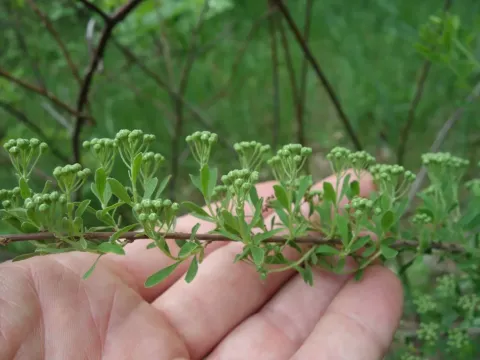
Spiraea crenata
Spiraea crenata
Spiraea crenata is a deciduous shrub belonging to the Rosaceae family. Known for its resilient nature, it typically grows up to 1.5 meters in height and is distinguished by its small, crenate-edged leaves and profuse spring blossoms.
What the section contains
Spiraea crenata
The native range of this species covers the steppe and forest-steppe zones across Eurasia. Due to its evolutionary history in harsh climates, it exhibits remarkable tolerance to drought, cold, and a wide range of soil conditions, making it a reliable choice for landscaping.
To ensure healthy growth, the plant requires full sun exposure; while it can survive in partial shade, flowering performance will decrease significantly. It prefers well-drained, neutral to slightly alkaline soil and is sensitive to waterlogged conditions which can lead to root issues.
Agricultural management primarily involves pruning, which should be performed immediately after the spring flowering period to promote vigorous growth for the following season. Regular soil cultivation and the removal of weeds are essential to maintain the shrub's vigor.
In terms of practical usage, Spiraea crenata is highly valued for creating hedges, ornamental borders, and soil stabilization on sloped terrain. Its dense root system and aesthetic appeal make it a popular selection for both public parks and private gardens.
The primary pests affecting Spiraea crenata are aphids, which target the tender shoots and leaves during the early growing season. Spider mites may also pose a threat, particularly in hot, arid conditions where they thrive.
Fungal issues, such as leaf spot and powdery mildew, are common occurrences when environmental conditions favor moisture retention. These diseases can detract from the plant's aesthetic value and negatively impact its overall health if left unmanaged.
Integrated pest management strategies should be employed, starting with the use of systemic insecticides during heavy infestations. Biological controls and the introduction of natural predators are also effective alternatives for smaller garden settings.
Preventive maintenance, including proper spacing and canopy thinning, is the most effective way to prevent fungal pathogens. Removing infected foliage and debris from the base of the shrub significantly reduces the likelihood of disease recurrence.
For more severe cases, fungicides are recommended as part of a targeted treatment plan. Always ensure that the selected products are safe for the surrounding vegetation and applied according to the manufacturer's specific guidelines.