
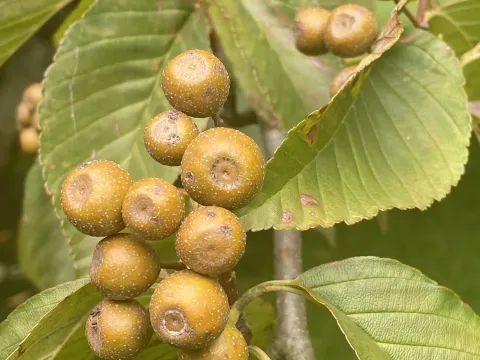
Giant-fruited Mountain Ash
Sorbus megalocarpa
The Giant-fruited Mountain Ash (lat. Sorbus megalocarpa) is a member of the Rosaceae family. This species is recognized for its larger-than-average berries, which offer superior culinary potential compared to standard varieties.
What the section contains
Giant-fruited Mountain Ash
Native to East Asia, the tree adapts well to various climates, preferring fertile, well-drained loamy soils. It thrives in open, sunny locations where it can receive sufficient light for fruit development.
Proper water management is essential for the healthy growth of this species. Although it is relatively hardy, young trees require regular irrigation during the summer months to prevent drought stress.
Soil structure is critical; the tree avoids heavy, waterlogged clay which can lead to root rot. Incorporating organic compost during the planting phase ensures optimal nutrient levels for several years.
This tree serves both as a decorative garden specimen and a productive agricultural crop. The berries are high in beneficial compounds, making them valuable for health-conscious food processing.
Like many trees in the Rosaceae family, this species is susceptible to apple scab. This fungal disease creates blemishes on the fruit, which should be managed through preventive fungicide applications.
Rowan moth larvae can significantly damage the fruit harvest. Integrated pest management, including timely monitoring and selective use of insecticides, is necessary to maintain high production quality.
Powdery mildew may develop during humid periods with stagnant air. Maintaining a well-pruned canopy helps increase air circulation, significantly reducing the occurrence of such infections.
Aphid infestations are a common challenge during the spring growth flush. Biological control methods, such as encouraging natural predators, are often effective in managing these pest populations.
Overall plant hygiene, including the removal of dead or diseased branches, is the most important step in protecting Sorbus megalocarpa from long-term damage and infestation.