
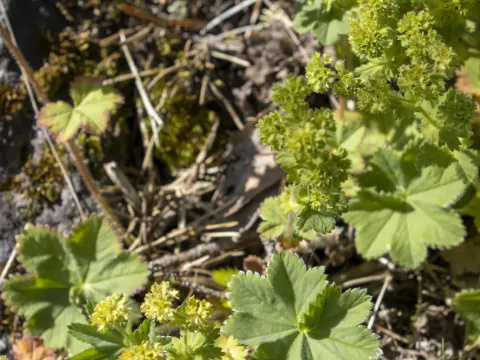
Glaucous lady's mantle
Alchemilla glaucescens
The glaucous lady's mantle (Alchemilla glaucescens) is a herbaceous perennial plant belonging to the Rose family (Rosaceae). It is native to mountainous regions across Europe, often found in alpine meadows and rocky slopes.
What the section contains
Glaucous lady's mantle
Botanically, it is characterized by its compact habit, featuring leaves with a distinct glaucous or grey-green tint, and small yellow-green flowers arranged in terminal clusters. It typically reaches a height of 20 to 30 centimeters.
The plant thrives in well-drained, moderately moist soils with a neutral or slightly acidic pH level. It shows high adaptability to temperate climates and can withstand both frost and periods of moderate drought during the summer season.
Cultivation requires minimal intervention, though it performs best in full sun or light shade. It is valued both as an ornamental ground cover and as a source of medicinal compounds, including tannins and various flavonoids used in herbal extracts.
In agricultural settings, it is propagated primarily through division of rootstock or seeds. Proper spacing between plants is recommended to ensure adequate air circulation, which prevents the buildup of humidity around the dense foliage.
The most common disease affecting the plant is powdery mildew, which thrives in conditions where the air circulation is poor or humidity levels are constantly high.
Root rot is a significant risk for the glaucous lady's mantle when grown in poorly draining, heavy clay soils, leading to the rapid decay of the root system and plant death.
Pests such as aphids and spider mites can infest the foliage, particularly during hot and dry spells, causing chlorosis and deformation of the young leaves.
Integrated pest management strategies should focus on maintaining plant vigor, as strong, well-nourished plants are generally more resistant to minor pest outbreaks.
Sanitation practices, such as removing fallen debris around the base of the plant in late autumn, help in reducing the overwintering population of harmful pathogens.