
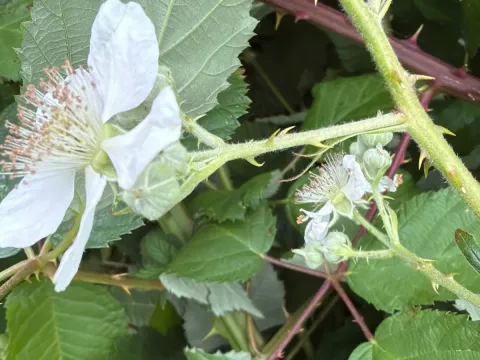
Giant blackberry
Rubus procerus
The giant blackberry (Rubus procerus) belongs to the Rosaceae family and is recognized for its robust, vigorous growth habits. It is a perennial shrub that can develop extensive canes, often requiring structural support to manage its sprawling nature.
What the section contains
Giant blackberry
The crop thrives in sunny locations with well-drained, fertile soil. Moisture retention is important, yet the plants are highly sensitive to waterlogging, which necessitates careful soil preparation and drainage management in heavy clay conditions.
Climate adaptation is a key feature of this species. It prefers temperate zones with mild winters, though in colder regions, protection for the canes during dormant months is essential to prevent frost damage and ensure a productive spring start.
Standard agrotechnical practices focus on trellis training. By tying the canes to support systems, farmers improve air circulation and sunlight penetration, which are vital for reducing humidity levels around the foliage and fruit clusters.
In terms of usage, the fruit is highly valued for fresh consumption, culinary applications, and commercial processing. Its ability to yield large quantities of fruit makes it a popular choice for both home gardeners and commercial berry producers.
The yield potential of the giant blackberry is significant when managed with proper pruning and feeding schedules. Adequate nutrient availability during the flowering and fruiting stages helps maximize berry size, density, and overall harvest weight per plant.
Common threats include fungal diseases such as leaf rust and cane blight, which can severely impact plant vigor. Implementing a strict pruning regimen to remove dead or diseased wood is the most effective way to prevent the spread of these pathogens.
Insects like aphids, mites, and various berry borers can also cause damage. Monitoring the plants throughout the growing season and utilizing integrated pest management strategies are crucial steps to maintain high productivity and ensure crop quality.
Harvesting is typically carried out by hand over several weeks, as the berries ripen sequentially. It is important to pick only fully ripe fruits to ensure optimal sweetness and flavor, which improves marketability and shelf life for the final product.