
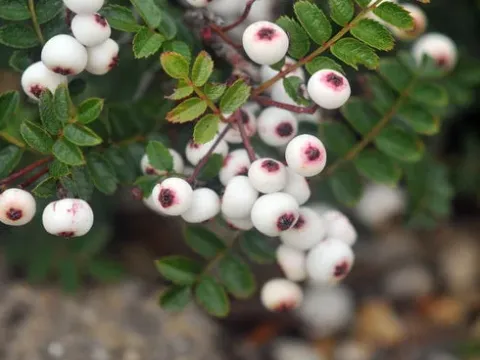
Sorbus poteriifolia
Sorbus poteriifolia
Sorbus poteriifolia, often referred to as the Burnet-leaved rowan, is a dwarf shrub belonging to the Rosaceae family. Native to the mountainous regions of Southwestern China, this plant is highly prized by collectors for its fern-like, pinnate foliage and unique, white-to-pinkish berry clusters.
What the section contains
Sorbus poteriifolia
In terms of agricultural requirements, this species thrives in cool, temperate climates. It requires well-drained, humus-rich soil and performs best in locations that offer partial shade to full sun. It is essential to ensure that the site does not experience waterlogging, as the root system is sensitive to poor aeration.
Botanically, it remains a low-growing plant, rarely reaching heights that would require significant structural support. Its resilience to low temperatures makes it an excellent candidate for colder gardening zones, provided the site is protected from harsh, desiccating winds that could damage early spring buds.
The primary use for this plant is ornamental; it serves as an excellent specimen for rock gardens, trough plantings, and small-scale landscape designs. Its slow growth rate means that it requires minimal pruning, making it a low-maintenance option for professional and amateur horticulturists alike.
Maintenance includes maintaining a consistent moisture level in the soil and applying a balanced, slow-release fertilizer during the active growing season. Mulching around the base is recommended to keep the soil cool and moist, mimicking the conditions of its natural highland habitat.
The plant can be susceptible to common Rosaceae ailments such as powdery mildew or fire blight in particularly humid environments. To mitigate these risks, it is recommended to maintain good plant spacing to ensure optimal air circulation and to avoid overhead irrigation whenever possible.
Pests, particularly aphids, can infest the succulent new growth in the spring. If monitoring reveals a significant infestation, organic insecticidal soaps or targeted systemic pesticides may be applied to protect the plant's aesthetic appeal without causing harm to beneficial garden insects.