
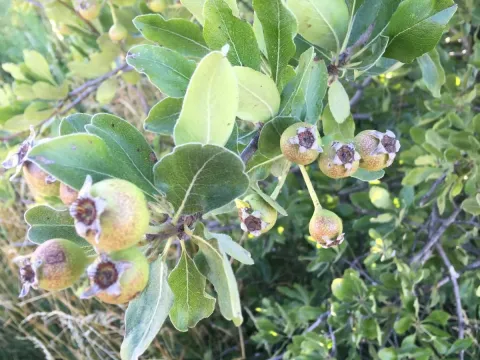
Sage-leaved pear
Pyrus salviifolia
Sowing seeds of the sage-leaved pear (Pyrus salviifolia) is most successful when performed in the autumn, allowing the seeds to undergo natural stratification during the winter months.
What the section contains
Sage-leaved pear
For spring sowing, seeds must be subjected to artificial stratification in a cool environment at temperatures between 0 and 5 degrees Celsius for at least 90 days to break dormancy.
The seeds should be planted in a well-draining, nutrient-rich soil medium at a depth of about 2 to 3 centimeters, maintaining consistent moisture levels during the germination phase.
It is crucial to keep the seedbed free from weeds, as the slow-growing seedlings are highly sensitive to competition for sunlight and nutrients during their first year.
In professional nurseries, Pyrus salviifolia is highly valued as a rootstock for commercial pear varieties due to its vigorous growth and strong compatibility with various scions.
The sage-leaved pear is a member of the Rosaceae family, natively occurring in Eastern Europe and Western Asia, where it has evolved to thrive in harsh environments.
This species requires full sun exposure and performs best when planted in open areas where it can receive maximum light intensity throughout the growing season.
It is exceptionally drought-tolerant and can grow effectively in rocky, calcareous, or poor soils where many other tree species would struggle to survive.
The tree is hardy and can withstand significant temperature fluctuations, making it an excellent candidate for reforestation or ornamental planting in arid regions.
While adaptable, the plant performs best in well-drained soil with a neutral to slightly alkaline pH, as standing water can lead to root rot and poor overall vitality.
The sage-leaved pear is primarily grown for its ornamental silver foliage and its utility as a reliable rootstock rather than for commercial fruit production.
The fruits are small, often spherical, and possess a rather astringent taste, making them more suitable for processing or experimental breeding than for fresh consumption.
Trees typically begin to bear fruit between the 5th and 7th year of growth, demonstrating consistent productivity even in less-than-ideal environmental conditions.
In landscaping, the tree serves as an elegant specimen due to its unique sage-like leaves, which provide a beautiful silvery contrast to darker garden greenery.
Due to its genetic resilience, this species is frequently used in breeding programs to introduce drought resistance and soil adaptability traits to new pear cultivars.
Common diseases affecting this species include pear scab and moniliosis, which are most prevalent during periods of high humidity and prolonged spring rainfall.
Fire blight represents a serious threat, requiring prompt sanitation, including the pruning and destruction of infected branches to prevent systemic spread.
Insect pests such as leafrollers and codling moths can cause damage to the foliage and developing fruits, necessitating regular monitoring during the growing season.
Preventative measures, such as removing fallen leaves and maintaining a clean orchard floor, significantly reduce the pressure of overwintering pathogens and pests.
Chemical control should be limited to strategic applications of copper-based fungicides or insecticides, applied strictly in accordance with local agricultural guidelines.
The harvest period typically occurs in late summer, when the fruits reach their characteristic size and develop their mature color, signaling optimal physiological maturity.
Care should be taken during the harvest to minimize mechanical damage to the fruits, as they are susceptible to bruising which can accelerate tissue decay.
For seed collection, fruits are allowed to ripen fully on the tree before extraction; the seeds are then cleaned and dried in a shaded, well-ventilated area.
If the fruit is intended for technical processing, it is important to collect it before over-ripening, which can degrade the quality of the harvested produce.
Post-harvest care involves clearing away debris from around the base of the tree and ensuring it receives adequate nutrients to recover before the onset of winter.