
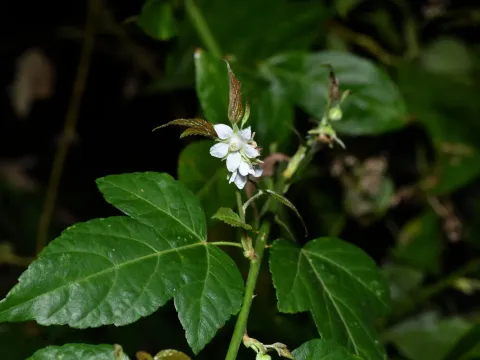
Rubus corchorifolius
Rubus corchorifolius
Rubus corchorifolius is a perennial shrub belonging to the Rosaceae family. It is native to Eastern Asia, specifically found in regions of China, Japan, and Korea, where it thrives in forest margins and mountainous terrains with moderate climatic conditions.
What the section contains
Rubus corchorifolius
Botanically, the plant is distinguished by its prickly stems and unique leaves that resemble those of the Corchorus plant. This species displays a bushy growth habit, and it is known for its ability to spread, making it suitable for wild fruit cultivation and ecological restoration projects.
For optimal growth, the species requires fertile, well-draining soils with a slightly acidic to neutral pH level. It performs best in locations that provide partial shade, mimicking its natural woodland habitat, while also ensuring protection from intense, direct midday sun.
Agricultural practices for this crop focus on maintaining consistent soil moisture, especially during the fruit-setting phase. Pruning is essential to manage the plant's spread, encourage new growth, and improve air circulation through the canopy to prevent internal moisture buildup.
In terms of usage, Rubus corchorifolius is prized for its edible berries, which are consumed locally and used in various culinary preparations like jams and syrups. Its resilience and potential nutritional value make it an interesting subject for small-scale fruit production systems.
Common plant health issues include fungal diseases such as gray mold and powdery mildew, which are often triggered by high humidity and poor ventilation. Maintaining a clean cultivation area and removing dead plant debris are vital practices for long-term health.
Pest management is focused on controlling raspberry beetles and various leaf-feeding caterpillars that may target the foliage and berries. Implementing integrated pest management strategies helps to protect the crop while minimizing the use of synthetic chemical applications.