
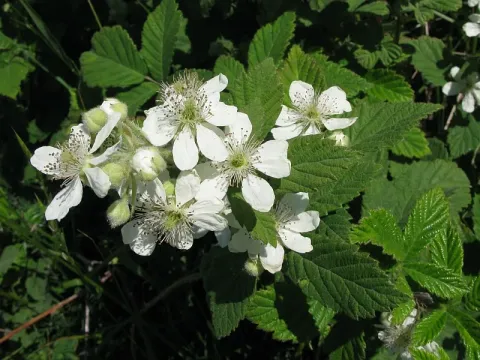
Rubus collinus
Rubus collinus
Rubus collinus, belonging to the Rosaceae family, is a perennial subshrub. Propagation of this crop in both commercial and amateur settings is most commonly achieved through vegetative methods: division of the bush, root suckers, or rooting of shoot tips.
What the section contains
Rubus collinus
Planting seedlings in open ground is recommended during the spring once the soil warms up to 10–12 degrees Celsius, or in early autumn before persistent frosts set in. The optimal planting scheme depends on shoot vigor and usually consists of 1.5–2 meters between rows and 0.8–1 meter within the row.
When propagating by seed, stratification is required for several months at low temperatures. However, the seed method is rarely used as it does not guarantee the preservation of varietal traits and requires a significant amount of time to develop a mature, productive bush.
To ensure good establishment, planting material must have a developed root system with no signs of rot. After planting, the specimens should be watered abundantly, and the base of the plant should be mulched with organic matter to retain moisture and suppress weed growth.
The plant demonstrates high plasticity, yet it prefers well-lit areas protected from cold winds. In shaded locations, shoots tend to become elongated, which negatively impacts the formation of flower buds and the subsequent productivity of the bush.
Rubus collinus is demanding regarding soil structure: it prefers light, fertile loams or sandy loams with a neutral or slightly acidic reaction. Waterlogging in the root zone is strictly prohibited as it quickly leads to root rot and plant death.
The crop is relatively winter-hardy, but in regions with harsh winters without snow cover, the shoots require protection. A crucial factor is providing regular irrigation during flowering and fruit set, as moisture deficiency leads to smaller fruits and reduced flavor quality.
Regular fertilization with mineral and organic fertilizers is necessary for normal growth and fruiting. In spring, nitrogen-based compounds are applied to stimulate shoot growth, while in summer and autumn, phosphorus-potassium mixtures are preferred to prepare the plant for winter.
An important element of agricultural technology is the formation of the bush. Throughout the season, sanitary and formative pruning is conducted, removing dry, damaged, or weak shoots, as well as pinching the tips to stimulate lateral branching.
Trellis support is an essential requirement for this plant. The use of trellises allows for the even distribution of shoots in space, ensures quality light exposure, and facilitates maintenance, including preventive spraying and harvesting.
The yield of Rubus collinus directly depends on the age of the bush, the quality of care, and regional climatic conditions. On average, with proper adherence to agricultural practices, one mature plant is capable of producing 3 to 6 kilograms of berries per season.
Peak fruiting occurs in the 3rd or 4th year after planting in its permanent location. To obtain a consistently high yield, it is necessary to strictly monitor irrigation schedules and provide timely applications of essential nutrients to the soil.
The harvest is formed on both previous-year and young shoots, depending on the specifics of the particular form, which allows for an extended period of fresh produce availability. The berries exhibit excellent commercial characteristics suitable for transport.
Yield indicators significantly decrease with irregular pruning and bush overcrowding, which leads to competition between shoots for nutrients. Proper regulation of the number of fruiting stems helps to avoid overstressing the plant.
The number of berries in a cluster and their size are genetically determined traits, however, proper mulching and control of soil acidity levels allow for the improvement of qualitative harvest indicators, making the fruits juicier and sweeter.
The main diseases of Rubus collinus are fungal infections such as anthracnose, rust, and various types of leaf spots. To combat these, broad-spectrum fungicides are applied, along with the timely removal of infected plant parts.
Among pests, the blackberry mite, aphids, and the strawberry blossom weevil pose the greatest danger. Infestation by these insects leads to berry deformation, leaf curling, and an overall weakening of the plant's immune system.
Disease prevention includes maintaining proper spacing during planting, which ensures good canopy ventilation. It is also important to regularly clear the area of plant debris, where fungal spores and insect larvae may overwinter.
To prevent pest outbreaks, the use of biological agents is recommended during the fruit ripening period, allowing for the production of eco-friendly produce without the use of harsh chemicals. The use of insecticides is only permissible before flowering begins.
- Shoot anthracnose
- Leaf rust
- Blackberry mite
- Common aphid
- Raspberry beetle
Harvesting of Rubus collinus is carried out in stages, as the berries ripen. It is recommended to harvest in the morning hours once the dew has evaporated, as this ensures better shelf life and preservation of the fruits' market appearance.
Berries are considered ripe when they acquire the deep color characteristic of the variety and become soft to the touch. Fruits should be picked carefully, trying not to squeeze them to prevent juice leakage and premature spoilage.
For commercial sale or long-term storage, berries should be picked with the calyx intact if transport requirements dictate. Under refrigerated conditions, freshly picked blackberries can maintain their quality for several days.
Using specialized containers (plastic clamshells with ventilation holes) helps avoid sweating of berries during harvest. The crop must be promptly moved to a cool, shaded place away from direct sunlight.
Regularity in harvesting is a key factor in preventing over-ripening, which attracts birds and wasps to the plot. Overripe berries left on the bush can also become a focal point for gray mold, which spreads to neighboring healthy fruits.