
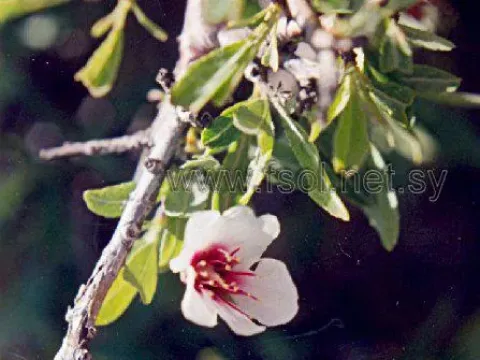
Korshinsky almond
Prunus korshinskyi
The Korshinsky almond (Prunus korshinskyi) is a wild woody species belonging to the Rosaceae family. It originates from the mountain regions of Central Asia, specifically thriving in arid environments. It is scientifically recognized for its high genetic potential in breeding programs for nut trees.
What the section contains
Korshinsky almond
Botanically, this species manifests as a shrub or a small tree capable of reaching significant age. It possesses a highly developed root system, which is a key adaptation for extracting water from deep, rocky soils where other fruit crops would fail to establish. Its leaves are simple and serrated, typical of the genus.
Environmental requirements for this species are centered on excellent drainage and intense solar radiation. It is not suitable for damp, clay-heavy soils that retain water, as the plant is prone to root rot. It is perfectly adapted to climates with hot, dry summers and cold, dry winters.
Regarding cultivation techniques, this almond is often managed with low intervention. It does not require frequent irrigation once established. However, for propagation, it is recommended to use scarified seeds or grafting techniques onto compatible rootstocks to maintain the desired characteristics of the wild type.
The primary economic use is as an essential genetic resource. Breeders utilize Prunus korshinskyi to introduce genes for drought tolerance, frost hardiness, and soil adaptability into domestic almond cultivars. It is also used as a hardy rootstock in specific breeding initiatives.
The primary diseases affecting this species include Monilinia blossom blight and various leaf spot pathogens that occur during humid spring conditions. Maintaining proper spacing and air circulation within the canopy is the most effective cultural method to reduce the risk of fungal infections.
Pest pressure mainly comes from almond seed wasps and spider mites. These pests can cause significant damage to the developing kernels and foliage, respectively. Integrated pest management strategies, focusing on early detection and biological control, are recommended for maintaining tree health.