
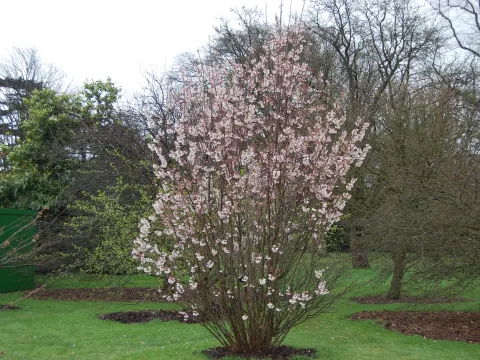
Kurile cherry
Prunus kurilensis
The Kurile cherry (Prunus kurilensis) belongs to the Rosaceae family and is recognized as a hardy deciduous shrub. Native to the Kuril Islands, Sakhalin, and Hokkaido, this species is well-adapted to harsh northern climates and cool environments.
What the section contains
Kurile cherry
This crop thrives in well-drained, fertile soil that maintains a neutral or slightly acidic pH level. Soil structure should be loose enough to allow for deep root penetration while avoiding waterlogged conditions that can cause root rot.
Optimal growth is achieved in full sunlight. While the plant can tolerate partial shade, maximum exposure to light is crucial for robust stem development and the abundant blooming associated with this species during the spring season.
The Kurile cherry is noted for its exceptional winter hardiness. Its natural evolution in volcanic and coastal northern terrains has equipped it to withstand severe frost and fluctuating temperatures, making it a reliable choice for cold climates.
Basic maintenance includes consistent irrigation during dry spells and the application of organic mulch around the base of the shrub. Pruning should be performed in early spring to remove dead wood and encourage dense, healthy foliage.
Fungal infections such as cherry leaf spot (coccomycosis) and brown rot (monilinia) are the primary biological threats to this shrub. These diseases impact leaf vitality and can lead to branch dieback if not managed properly.
Common insect pests include aphids, winter moths, and various weevils that feed on the succulent tissues of young buds and leaves. High infestations can stunt growth and significantly diminish the plant's aesthetic and health value.
Cultural management is the first line of defense. This includes regular sanitation, such as clearing away fallen debris from the base of the plant every autumn, which eliminates potential overwintering sites for fungal spores and larvae.
Periodic application of fungicides is recommended during the early development stages. Using copper-based solutions or targeted horticultural oils can protect the plant from early-season outbreaks and maintain strong systemic health.
Integrated pest management, involving both mechanical removal of infected parts and the introduction of beneficial insects, can help maintain balance. Regular observation of foliage allows for early detection and rapid response to emerging threats.