
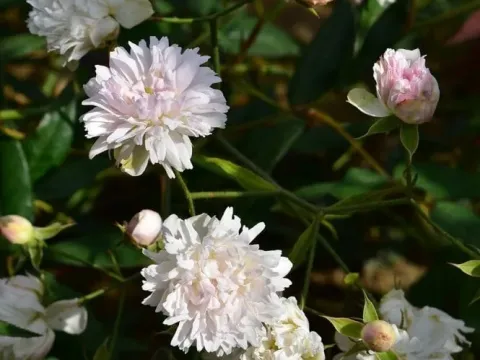
Anemone rose
Rosa anemoniflora
The Anemone rose (Rosa anemoniflora) belongs to the Rosaceae family. This species, native to China, is highly prized by gardeners for its unique floral structure, where the blooms resemble anemones, creating a striking visual impact.
What the section contains
Anemone rose
The plant thrives in sunny locations protected from strong winds. It requires well-drained, fertile loamy soil with a neutral to slightly acidic pH to ensure vigorous growth and healthy root development.
Being moderately hardy, this rose species requires winter protection in regions with harsh climates. Proper irrigation is crucial; watering should be done directly at the base to prevent moisture from sitting on the petals, which helps avoid fungal issues.
Regular fertilization with potassium and phosphorus-rich fertilizers is essential to support the plant's energy needs during the flowering season. Mulching around the base is recommended to retain soil moisture and reduce weed competition.
Botanically, this is a climbing rose known for its flexible canes, making it an excellent choice for vertical gardening, including covering trellises, arbors, and garden walls.
Rosa anemoniflora is susceptible to common fungal diseases, including black spot and powdery mildew, especially if air circulation is poor or if the plants remain damp for extended periods.
Common pests such as aphids and spider mites can infest the foliage, particularly during dry and hot weather, potentially leading to stunted growth and reduced blooming performance.
Integrated pest management, including regular sanitary pruning and removal of diseased branches, is vital for maintaining plant health and preventing the spread of infections.
Application of fungicides and insecticides should be conducted according to the manufacturer's guidelines, preferably avoiding periods of heavy pollinator activity in the garden.
Monitoring the plant for signs of nutrient deficiencies, such as chlorosis, is important to adjust soil fertility and ensure the rose maintains its natural resistance to environmental stressors.