
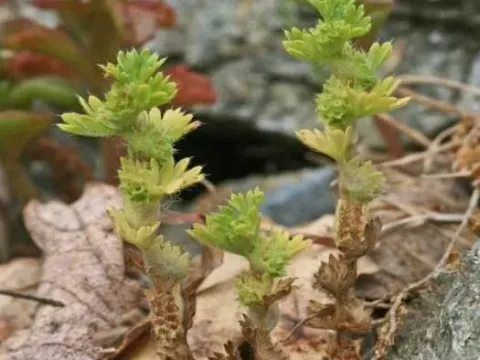
Aphanes floribunda
Aphanes floribunda
Aphanes floribunda is a small herbaceous annual plant belonging to the Rosaceae family. Known for its unassuming appearance, this species is frequently encountered in open, disturbed landscapes and as a companion plant in various agricultural settings.
What the section contains
Aphanes floribunda
The species originates from temperate regions and has established a wide distribution across various habitats, including dry pastures and field margins. It thrives in environments where competition for resources is initially low due to its quick development cycle.
Botanically, it features highly divided leaves and very small, greenish flowers clustered in leaf axils. Its growth habit is prostrate to ascending, allowing it to occupy ground space efficiently without needing significant height, which is a key survival strategy for this annual.
Regarding climate and soil, the plant prefers well-drained, sandy or loamy soils with adequate sunlight exposure. It is highly adaptable to varying precipitation levels but performs best during cooler, moist periods of the early growing season.
In terms of agricultural impact, Aphanes floribunda is typically classified as a weed. While it does not provide direct economic value, farmers monitor its presence as it can compete with young cereal crops for nutrients and soil moisture during the critical stages of establishment.
The plant demonstrates natural resistance to many common agricultural pests. Its rapid lifecycle allows it to complete its reproductive stage before many insect populations reach their peak, serving as an evolutionary escape mechanism.
Chemical control remains the most effective method for managing Aphanes floribunda in commercial farming. It is susceptible to standard broadleaf herbicide applications used in grain production, particularly those targeting early-stage weed growth.
Fungal diseases are rare and usually limited to conditions of excessive moisture or improper field aeration. These infections are generally sporadic and do not pose a significant threat to agricultural productivity in the affected areas.
Cultural control measures, such as mechanical weeding and regular tillage, prove highly effective in managing the seed bank. By disturbing the soil profile, growers can disrupt the germination of dormant seeds and reduce future infestation levels.
Overall, proper field hygiene, including the use of certified seed and thorough cleaning of agricultural machinery, is essential for minimizing the spread of this species. Consistent monitoring ensures that populations remain below the threshold that would require intervention.