
American mountain-ash
Sorbus americana
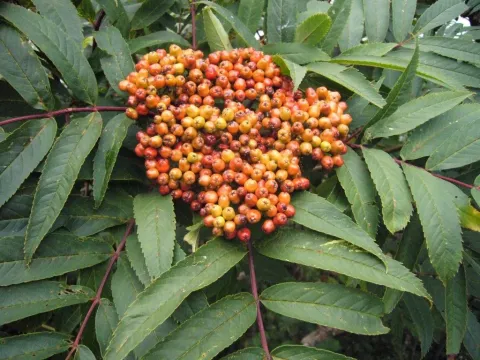
The American mountain-ash (Sorbus americana) is a member of the Rosaceae family, native to the cooler regions of eastern North America. This tree typically grows as a small to medium-sized tree, valued for its pinnate foliage and large clusters of bright red fruit.
What the section contains
American mountain-ash
This species thrives in cool, moist, and well-drained soils that are slightly acidic. It is sensitive to soil compaction and waterlogging, requiring a site with good aeration to ensure healthy root development throughout its lifespan.
Optimal growth conditions include full sun exposure, although the tree can tolerate partial shade in warmer parts of its range. Providing consistent moisture during the growing season is crucial, as the plant is not well-adapted to prolonged drought conditions.
Maintenance practices involve regular mulching to preserve soil moisture and temperature regulation for the root system. Annual pruning should be limited to removing dead or crossing branches to maintain a healthy and aesthetically pleasing crown structure.
In terms of utilization, Sorbus americana is a popular choice for ornamental landscape design, particularly in native gardens. Its berries provide a critical food source for wildlife, especially birds, during the late autumn and early winter months.
Common diseases affecting the American mountain-ash include fungal infections such as apple scab, powdery mildew, and rust, which often emerge during periods of prolonged wet weather.
Fire blight is a significant bacterial threat that can cause sudden wilting and blackening of branches. Infected areas should be pruned out immediately with sanitized tools to prevent the further spread of the pathogen within the tree.
Various insects, including aphids, leaf miners, and scale insects, can attack the foliage and stems. These pests can diminish the overall vigor of the tree and reduce its ornamental quality if left uncontrolled.
Integrated pest management strategies, such as using horticultural oils or systemic insecticides, are recommended to maintain tree health while minimizing harm to beneficial garden insects.
Maintaining proper tree health through balanced fertilization and adequate watering is the best defense against stressors that may otherwise make the tree more susceptible to secondary infections and infestations.