
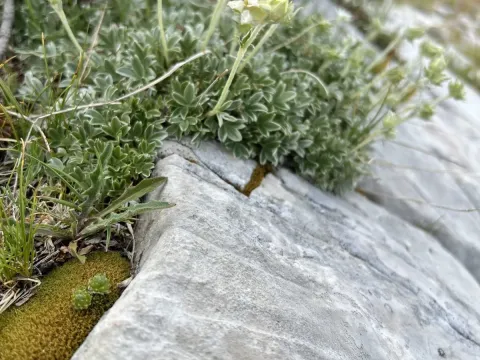
Apennine cinquefoil
Potentilla apennina
The Apennine cinquefoil (Potentilla apennina) is a perennial herbaceous plant belonging to the Rosaceae family. Native to the mountain ranges of Southern Europe, specifically the Apennines, it is naturally adapted to limestone cliffs and stony habitats.
What the section contains
Apennine cinquefoil
Botanically, it is recognized for its dense, cushion-forming habit and distinctive silver-hairy foliage. The plant produces delicate white or pale pink flowers that bloom in early summer, making it a highly prized specimen for alpine and rock garden collections.
Cultivation requires conditions that mimic its natural mountain environment. This means full sun exposure and gritty, well-draining soil are non-negotiable. Poor soil drainage is the most common cause of failure for this specific species in domestic gardens.
Soil pH should lean towards alkaline, given its native affinity for limestone. Providing a gritty substrate allows for quick moisture runoff, ensuring that the crown of the plant stays dry, which is critical for the longevity of the perennial cushion.
During the growing season, it is essential to minimize overhead watering. The silvery hairs on the leaves, while aesthetic, can trap moisture, increasing the risk of foliage degradation if the humidity remains consistently high for extended periods.
The primary threat to Potentilla apennina is crown rot, triggered by poor drainage or excessive soil moisture during the dormant winter months. Ensuring a deep layer of grit or gravel around the base of the plant helps prevent direct contact between wet soil and the foliage.
Aphids can occasionally colonize the flower buds, causing malformation. While generally manageable, monitoring is required during the rapid growth phase of the spring to prevent damage to the flower stems.
Powdery mildew may manifest if air circulation is insufficient. This is common in regions with high humidity. Proper spacing between individual plants and avoiding dense companion planting are effective strategies to maintain airflow.
Root-knot nematodes are potential underground pests that can cause stunted growth. If the plant fails to thrive despite proper soil conditions, inspecting the root system for characteristic galls is recommended.
Slugs and snails can occasionally graze on the foliage in damp conditions. Using protective barriers or traps around the base of the plants is a recommended control measure for sensitive alpine specimens like the Apennine cinquefoil.