
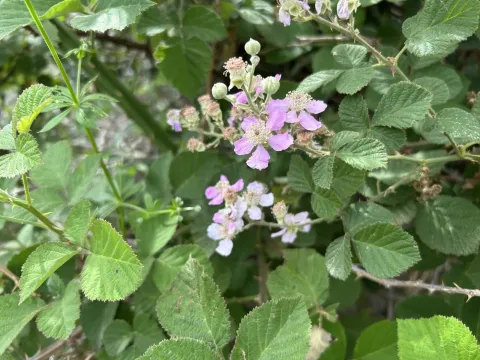
Anatolian blackberry
Rubus sanctus
Anatolian blackberry (Rubus sanctus) is a member of the Rosaceae family. Native to the Eastern Mediterranean, the Middle East, and the Caucasus, this perennial shrub is well-adapted to varied environments, including riverbanks and rocky slopes.
What the section contains
Anatolian blackberry
The plant is characterized by its thorny, arching stems that can root at the tips. Its leaves are compound, typically trifoliate, with a distinct grayish pubescence on the underside that helps the plant cope with high temperatures and dry conditions.
For optimal growth, this species requires a Mediterranean or subtropical climate with mild winters. In regions with harsher conditions, the plant may require winter protection or greenhouse cultivation. High sunlight exposure is essential for photosynthesis and fruit maturation.
The preferred soil type is well-drained and slightly acidic to neutral. The plant cannot tolerate waterlogged conditions, which lead to root rot. On heavier soils, it is recommended to build mounds or use drainage systems to ensure root health.
Economic uses include the commercial harvesting of berries for preserves and culinary purposes. Beyond its fruit, the shrub is widely planted as a functional hedge, effectively serving as an impenetrable natural barrier due to its dense network of spines.
Common fungal diseases affecting this crop include rust and anthracnose, which typically proliferate in humid environments. Proper canopy management through regular pruning is the most effective preventative measure against these pathogens.
Insect pests, such as the raspberry beetle and blackberry mites, pose significant challenges to yield quality. These pests can deform the fruit or weaken the overall vitality of the cane, leading to reduced productivity if left untreated.
An integrated pest management approach is recommended, starting with rigorous sanitation of the plantation. Removing and destroying infested plant material prevents the spread of spores and larvae throughout the following growing season.
Chemical interventions should be used sparingly and only when necessary, keeping in mind the safety of beneficial insects like pollinators. Applying organic pesticides early in the season can effectively mitigate early pest colonization.
Soil health and proper fertilization play a crucial role in plant immunity. Maintaining a nutrient-rich environment helps the canes withstand stress and reduces their attractiveness to secondary pests during the hottest months of the year.