
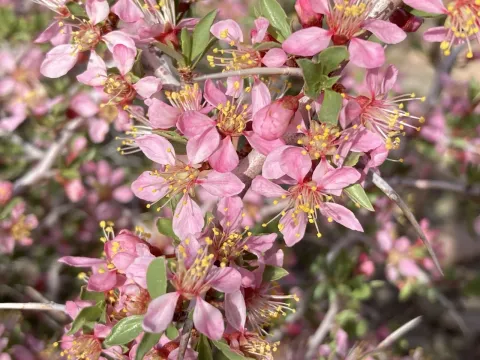
Anderson peachbrush
Prunus andersonii
Anderson peachbrush is a perennial shrub belonging to the Rosaceae family, native to the arid desert regions of California and Nevada. It is a highly specialized plant that has evolved to thrive in environments with extreme temperature fluctuations and very low annual precipitation levels.
What the section contains
Anderson peachbrush
To cultivate this species successfully, it is essential to replicate its natural habitat by providing well-drained, gritty, or sandy soils. It is strictly intolerant of heavy clay soils that retain moisture, as these conditions rapidly lead to root decay and the death of the specimen.
The plant exhibits unique botanical traits, such as dense, thorny branches that serve as a defense mechanism. In early spring, the shrub produces a prolific display of small, pink flowers, which are followed by small, fuzzy drupes that contain seeds consumed by local wildlife.
Agricultural management of Anderson peachbrush is minimal due to its drought-tolerant nature. It requires full sun exposure throughout the day to remain healthy and vibrant. Pruning should be restricted to removing dead wood to maintain the plant's natural, airy structure without inducing stress.
In terms of practical usage, this shrub is highly valued for xeriscaping projects and erosion control in arid climates. It serves as a vital component in restoring native plant communities, providing shelter and forage for birds and small mammals in challenging landscape environments.
The primary health threats for Prunus andersonii in non-native environments are root pathogens triggered by excessive moisture and poor air circulation. Over-watering is the most frequent cause of mortality in gardens where the plant is introduced without proper drainage systems.
Pest issues are generally minor but can include infestations of aphids or leaf-feeding insects during the early growth stages. Integrated pest management strategies, emphasizing mechanical removal and environmental control, are usually sufficient to maintain the vigor of the plant population.