
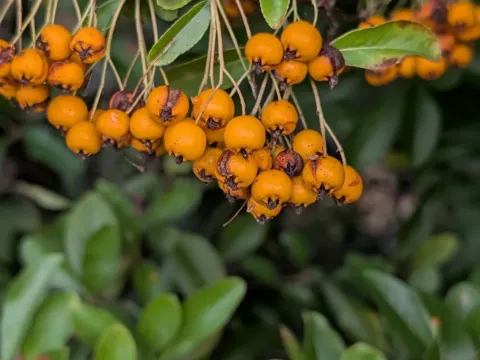
Pyracantha
Pyracantha
Pyracantha is a genus of evergreen thorny shrubs belonging to the Rosaceae family. Native to regions in Southern Europe and Asia, these plants are widely recognized for their vibrant berries and structural importance in ornamental gardening.
What the section contains


Pyracantha
The plant thrives in sunny locations with well-drained, fertile soil. It exhibits high adaptability to various soil types, although neutral to slightly alkaline pH levels are considered optimal for the best growth results.
Watering requirements are moderate; once established, the shrub is remarkably drought-tolerant. However, supplemental irrigation is necessary during prolonged dry spells to ensure consistent foliage health and berry production.
Cultivation practices involve regular pruning to manage the dense growth and thorny branches. This is crucial for maintaining the desired shape, especially when the plant is used as a formal hedge or against walls.
Regarding its utility, Pyracantha is highly valued for creating impenetrable security hedges. The dense canopy and sharp thorns provide both privacy and a habitat for local wildlife, while the colorful fruit enhances winter landscapes.
The most significant threat to the plant is fire blight, caused by the bacterium Erwinia amylovora. This severe disease can cause branches to wilt and turn black rapidly; infected wood must be pruned and disposed of carefully.
Aphids are common pests that colonize new, tender shoots during the spring season. If left untreated, they can cause stunted growth and promote the development of sooty mold, which negatively affects the plant's aesthetic value.
Fungal issues such as scab can occur in humid conditions, manifesting as unsightly spots on leaves and berries. Proper spacing and airflow management within the plant structure are effective preventative strategies against fungal spread.
Spider mites may infest the plant during hot, dry periods, leading to yellowing leaves and reduced vigor. Monitoring for these small pests is essential, as heavy infestations can lead to significant foliage loss over time.
Maintaining high plant health through balanced fertilization and sanitation is the best defense against pests and diseases. Regular inspections should be a standard part of the agricultural management plan for all Pyracantha plantings.