
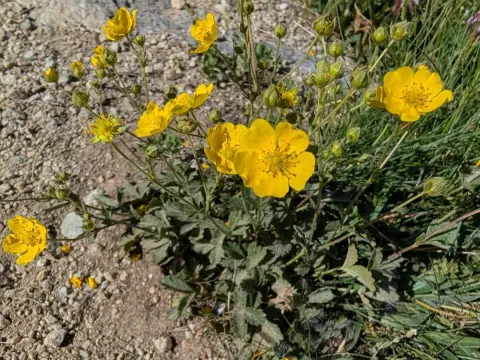
Potentilla grandiflora
Potentilla grandiflora
Sowing Potentilla grandiflora seeds is best performed in early spring using a seed tray filled with a light, well-draining substrate. Seeds require light to germinate, so they should not be covered deeply with soil.
What the section contains
Potentilla grandiflora
Maintain a stable temperature of approximately 20 degrees Celsius to ensure uniform germination. Keep the soil surface consistently moist but not waterlogged, as excessive dampness can lead to damping-off disease.
Seedlings should be pricked out when they develop their first set of true leaves. This procedure encourages a more branched root system, which is vital for the plant's future resilience in open ground.
Transplanting into the permanent garden location should occur after the danger of severe night frost has passed. Hardening off the seedlings for a week before planting is recommended to improve survival rates.
Proper spacing is crucial for Potentilla grandiflora to prevent crown rot; aim for at least 30–40 cm between individual plants to promote healthy air circulation.
Potentilla grandiflora is a perennial member of the Rosaceae family. It is native to alpine regions, which defines its preference for cooler climates and excellent drainage capacity.
The plant thrives in full sun or light shade and requires moderately fertile, slightly alkaline or neutral soil. It is particularly well-suited for rock gardens and borders where soil compaction is minimal.
Watering should be balanced; while the plant is somewhat drought-tolerant once established, supplemental irrigation is necessary during prolonged dry spells to maintain vibrant blossoms.
Minimal fertilization is required; a single application of balanced granular fertilizer in early spring is usually sufficient to support vigorous growth and seasonal flower production.
Pruning of old stems and spent flower heads after the main blooming cycle helps keep the plant compact and encourages potential secondary flowering in late summer.
The main threats to this species include fungal infections such as powdery mildew, which commonly occur in humid conditions with poor airflow. Improving the layout can mitigate these risks.
Pests like aphids and spider mites can infest the foliage, particularly during dry seasons. Regular inspection of the undersides of the leaves is advised to catch infestations early.
Integrated pest management strategies are recommended, utilizing soft horticultural soaps or biological control agents to manage populations without harming beneficial garden insects.
Proper garden hygiene, including the removal of dead leaf litter and debris from around the base of the plant, reduces the overwintering sites for pathogens and larvae.
Avoid overhead watering whenever possible, as wetting the foliage provides the necessary environment for fungal spores to germinate and spread effectively.