
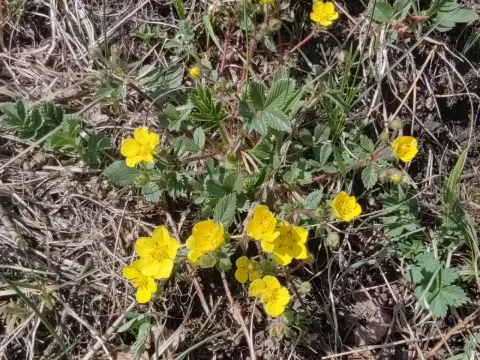
Potentilla fragarioides
Potentilla fragarioides
Potentilla fragarioides, commonly known as strawberry cinquefoil, can be propagated through seeds or by dividing mature clumps in early spring or autumn.
What the section contains
Potentilla fragarioides
Seeds require a period of cold stratification to break dormancy, so sowing them in late autumn outdoors is the most natural and effective method.
If sowing indoors, place the seeds in a moist substrate and keep them in a refrigerator for several weeks before moving them to a warmer environment.
For vegetative propagation, carefully separate the root system of a healthy, mature plant, ensuring that each segment has sufficient buds for regrowth.
Spacing the plants about 30 to 40 centimeters apart allows for optimal air circulation, which prevents the development of fungal diseases in the foliage.
This perennial herb belongs to the Rosaceae family and is well-adapted to various soil types, ranging from light sandy loams to slightly heavy soils.
Potentilla fragarioides thrives in full sun but demonstrates good tolerance for partial shade, making it a versatile choice for different landscape settings.
Adequate soil drainage is essential for the health of this species, as waterlogged conditions often lead to root rot and significant physiological stress.
The plant is highly frost-tolerant and can endure the harsh winter conditions typical of temperate climates without the need for additional ground protection.
While the plant is relatively drought-resistant once established, regular irrigation during the first season promotes faster root development and initial vigor.
The economic value of Potentilla fragarioides primarily lies in its use as a medicinal herb, with the aerial parts and roots being the main harvested products.
Yield capacity is influenced by soil fertility, although the species can successfully adapt to nutrient-poor soils, which is beneficial for low-input farming.
Regular maintenance, including the removal of competing weeds, ensures that the plants reach their maximum biomass production throughout the growing season.
A well-maintained plot can sustain productive harvests for several consecutive years, making it a reliable crop for small-scale herbal producers.
To maximize active ingredient content, the crop should be harvested at the specific developmental stages indicated for medicinal plant cultivation.
Potentilla fragarioides is generally hardy, but it can be susceptible to powdery mildew if planted in areas with poor airflow and high humidity levels.
Root rot caused by Phytophthora or Pythium species may occur if the soil remains excessively wet for long periods, especially in poorly drained sites.
Occasional infestations by aphids or spider mites can be managed using mild insecticidal soaps or biological controls to protect the medicinal quality of the plant.
Preventing cross-contamination from weeds is vital, as wild plants can host pathogens that affect the health and appearance of the cinquefoil.
Crop rotation practices should be employed if the plant is grown in large quantities to minimize the build-up of soil-borne diseases over time.
Harvesting of the foliage should take place during the peak flowering period, using sharp tools to cleanly cut the stems without damaging the root base.
For root harvesting, the work is best performed in the late autumn after the aerial parts have withered, as this is when the roots contain the highest concentrations.
Post-harvest handling requires immediate drying in a shaded, well-ventilated area to maintain the chemical integrity of the harvested plant material.
The drying process should be gradual, avoiding direct sunlight or excessively high temperatures that could degrade the delicate phytochemical constituents.
Once fully dried, the herbal product should be stored in opaque, airtight containers to protect it from moisture, light, and potential oxidation.