
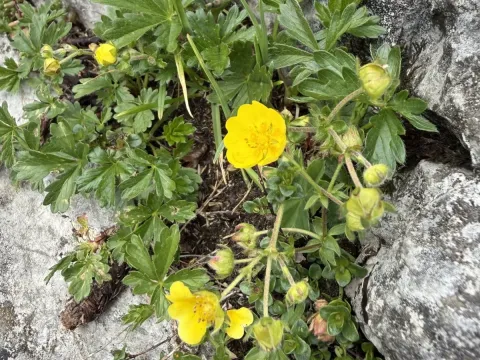
Golden cinquefoil
Potentilla aurea
Seeds of the golden cinquefoil are typically sown late in autumn directly into the soil or in early spring following a period of stratification. For best results, sow in seed trays with a loose, well-draining substrate to monitor germination closely.
What the section contains
Golden cinquefoil
When sowing directly into the ground, choose a location that warms up quickly in the sun. Seeds should be surface-sown, covered only with a thin layer of sand or fine soil, as they require light to germinate effectively.
Seedlings emerge relatively slowly, so maintaining consistent surface moisture is crucial until the first pair of true leaves is fully developed. Once seedlings are strong enough, thin them out or transplant them to their final location.
Vegetative propagation is achieved by dividing the rootstock either in early spring or in late August. This is the most reliable method for ensuring the new plants retain all the parent's desirable aesthetic characteristics.
The plant handles transplanting well if the root ball remains intact. When creating a dense groundcover, space plants about 20–25 centimeters apart to allow the perennial to establish itself efficiently.
Golden cinquefoil, a member of the Rosaceae family, is a classic alpine plant native to the high-altitude meadows and rocky slopes of Europe. This origin makes it exceptionally hardy and well-suited to cooler climates.
The plant thrives in full sun, as shade can cause the stems to become leggy and significantly reduce the intensity and vibrancy of the flowers. High light exposure is essential for maintaining its compact habit.
Soil should be well-draining and moderately fertile, with a neutral to slightly acidic pH. Avoid heavy clay soils where water can pool, as this risks root rot; adding gravel or sand to the planting site is highly recommended.
Water requirements are moderate, as the golden cinquefoil is fairly drought-tolerant once established. However, during prolonged dry spells, occasional deep watering will support healthy foliage and blooming.
Maintenance includes routine weeding to prevent competition from more aggressive species. Mulching with fine stone or grit helps retain moisture while mimicking the natural stony environment of its native alpine habitat.
For golden cinquefoil, yield refers to its ornamental output and its function as a high-quality groundcover in landscape design. It is highly valued for its ability to transform rocky areas into vibrant floral carpets.
When properly cared for, the plant forms dense, low-growing mats reaching only 10–15 centimeters in height. Its golden-yellow flowers with distinctive orange centers provide high visual appeal per square meter of planting space.
Blooming commences in late spring and continues throughout mid-summer. By deadheading the spent flowers, gardeners can encourage a second flush of blossoms later in the season, extending the display period.
The longevity of the plant allows it to thrive in the same spot for many years without losing its decorative quality. This makes it a cost-effective choice for long-term landscaping projects and perennial borders.
In landscaping, golden cinquefoil is highly appreciated for its tolerance to foot traffic and its effectiveness in stabilizing embankments in rock gardens. It serves as an essential component for gardeners looking to maintain a naturalistic alpine look.
The primary threats to golden cinquefoil are fungal diseases such as leaf spot and powdery mildew, which flourish in high-humidity environments with poor air circulation.
Pests are generally rare, but heavy infestations of spider mites can occur if the plants become overcrowded. Preventive treatment with acaricides should only be applied if significant colonies are detected.
Root rot remains the most serious threat, usually resulting from improper planting conditions, such as overly dense soil or areas where water fails to drain away from the root zone.
Aphids may occasionally attack tender young shoots in early spring. These can be managed using simple soapy water solutions or mild, environmentally friendly bio-insecticides.
Annual sanitary pruning in early spring, where old and dead foliage is removed, is recommended to ensure good airflow and significantly reduce the risk of disease throughout the growing season.
Seed harvesting should take place in August as the capsules ripen. The capsules should be carefully clipped and dried in a well-ventilated, shaded area until they release their seeds.
Once dried, the seeds should be cleaned of debris and stored in paper packets in a cool, dry place. The germination viability of these seeds typically lasts for up to two years.
In terms of garden management, "harvesting" can involve dividing established clumps. These divisions are ideal for expanding current plantings or sharing with other gardening enthusiasts.
Removal of spent flower stalks is best done in July, allowing the plant to redirect its energy toward root development and foliage production for the upcoming year.
Winter preparation includes clearing the surrounding area of any weeds and applying a light mulch of compost or leaf mold to protect the crowns and provide nutrients for the following spring.