
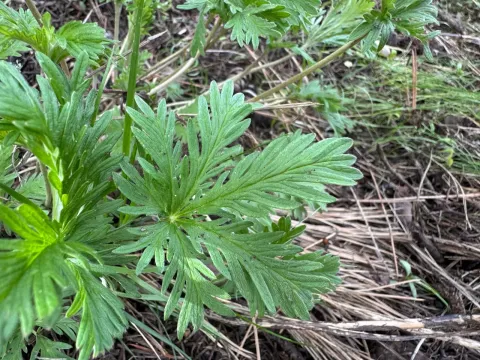
Graceful cinquefoil
Potentilla gracilis
Sowing of Graceful cinquefoil is primarily carried out in the spring, once the soil temperature reaches 10–12 degrees Celsius. The seeds exhibit high germination rates but require preliminary stratification to increase their sprouting energy under field conditions.
What the section contains
Graceful cinquefoil
When cultivating on an industrial scale or for establishing phytocenoses, seeds should be sown at a depth of no more than 1–2 centimeters. Surface sowing promotes more uniform emergence, as small seeds are sensitive to soil surface compaction.
The optimal sowing pattern involves row spacing of 30 to 45 centimeters. This ensures sufficient room for the development of a strong root system and significant biomass during the first year of growth.
Graceful cinquefoil also propagates excellently by vegetative methods, specifically through root division. This approach allows for faster establishment of a full-stand crop or ornamental plantings while preserving the parent plant's varietal characteristics.
After sowing, it is recommended to lightly roll the area to improve seed-to-soil contact. In conditions of insufficient moisture, irrigation is mandatory until the first true leaves appear.
The crop belongs to the Rosaceae family and demonstrates high adaptability to various climatic zones. Its natural range covers the western part of North America, where it thrives in open meadows and on hillsides.
The plant prefers well-drained loamy or sandy soils with a neutral or slightly acidic pH. It does not tolerate waterlogging well, so artificial drainage is necessary in areas with high groundwater levels.
Graceful cinquefoil is a light-loving crop. To ensure full flowering and the accumulation of vegetative mass, it is essential to choose maximally illuminated areas that are protected from strong winds.
The crop is not demanding regarding temperature conditions, possessing high frost resistance. It successfully overwinters in temperate climates without additional cover, maintaining rootstock viability even during significant sub-zero temperatures.
Agrotechnical management includes regular weeding of row spaces to control weeds and improve soil aeration. Applying mineral fertilizers rich in phosphorus and potassium promotes immunity strengthening and increases overall crop productivity.
The economic use of Graceful cinquefoil in agriculture is tied to its potential as a component of forage areas and as a valuable honey plant. Biological productivity depends on stand density and the level of agrotechnical input.
In natural pastures, the plant is valued for its early green mass regrowth. In favorable years, green mass yield can reach significant levels, making it a promising crop for inclusion in grass mixtures.
In ornamental gardening, productivity is measured by the intensity of flowering and foliage density. Proper care allows for abundant flowering throughout the summer season, which is highly sought after in landscape design.
The crop is also considered a potential source of medicinal raw materials due to the presence of flavonoids and tannins. Harvesting is usually performed during the full flowering phase for maximum accumulation of bioactive compounds.
Yield stability depends on annual rejuvenation of the plantings. After 4–5 years, productivity may decline, so periodic root division is recommended to maintain a high growth intensity.
Graceful cinquefoil is characterized by high resistance to most typical diseases, although excessive moisture may lead to fungal infections. Powdery mildew, manifested by a white coating on the leaves, is the most common issue.
To prevent the spread of fungal diseases, it is necessary to maintain proper planting density. In the event of an epiphytotic, copper-based fungicides or specialized systemic products should be applied.
Among pests, leaf-eating insects, such as lepidopteran larvae, pose the greatest danger. They can damage the leaf blade, reducing both the ornamental value and the photosynthetic activity of the plant.
During dry periods, aphid infestations may occur, as they extract sap from young shoots. Regular monitoring and the use of bio-insecticides allow for the control of pest populations without environmental harm.
The root system may be damaged by wireworms if agrotechnical practices are neglected and the field is infested with weeds. Pest control includes deep autumn plowing and crop rotation that excludes predecessors prone to attracting soil pests.
Harvesting green mass for forage purposes is carried out during the budding stage or at the start of flowering. At this time, the plant contains the maximum amount of nutrients and easily digestible carbohydrates required by livestock.
When harvesting medicinal raw materials, the aerial part of the plant is cut, leaving a portion of the shoots for regeneration. Drying should take place in well-ventilated areas or specialized dryers at a temperature not exceeding 45 degrees Celsius.
For seed production, harvesting is performed at the end of the season when the inflorescences turn brown. It is crucial to collect the seeds before they shatter; therefore, multi-stage harvesting or selective picking of the most mature inflorescences is practiced.
After the end of the growing season, before the arrival of steady cold, it is recommended to mow the remaining aerial parts to a height of 5–10 centimeters. This promotes better root system development and prevents the accumulation of disease pathogens.
Harvesting equipment must be disinfected, especially when working across large areas. Proper cleaning and sorting of the collected material ensure high sowing standards and extended shelf life for the products.