
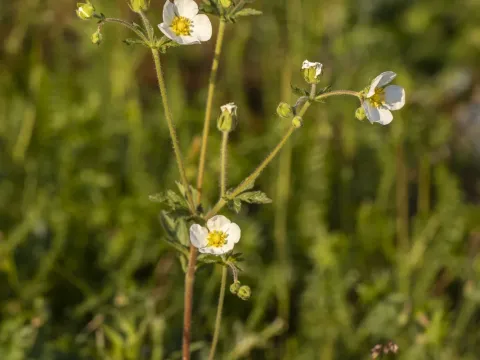
Rock Cinquefoil
Drymocallis rupestris
Sowing Rock Cinquefoil seeds is typically performed in late autumn for winter stratification or in early spring following a cold treatment. Seeds require a period of low temperatures to break dormancy and ensure high germination rates, making them suitable for direct outdoor sowing in cooler climates.
What the section contains
Rock Cinquefoil
For greenhouse production, use a light, well-draining substrate composed of peat, perlite, and coarse sand. Seeds should be surface-sown or barely covered with a fine layer of vermiculite, as light exposure is often beneficial for initial germination stages.
Maintaining a stable temperature around 18-20 degrees Celsius is optimal for uniform sprout emergence. Once seedlings develop their second set of true leaves, they should be carefully pricked out into individual small pots to encourage robust root development before field transplantation.
Hardening off the plants is a critical step before transferring them to permanent locations in the garden. This process involves gradually exposing the young plants to outdoor environmental stressors over the course of one to two weeks to prevent transplant shock.
Planting in the field should occur after all risks of frost have passed. Space the plants adequately, usually 20-30 centimeters apart, to allow for optimal airflow and to prevent the development of moisture-related fungal pathogens between the foliage.
Rock Cinquefoil belongs to the Rosaceae family and is inherently adapted to rocky, well-drained habitats. In agriculture and horticulture, it demands a site that mimics these natural conditions, specifically emphasizing excellent drainage and high solar exposure throughout the day.
The ideal soil profile for this species is sandy or rocky, with a neutral to slightly acidic pH. Heavy clay soils are generally unsuitable unless extensively amended with inorganic drainage materials like grit or gravel to prevent the accumulation of moisture near the crown.
Climatic requirements are relatively modest; the plant is hardy and adapted to temperate zones. However, it requires a dry dormancy period in winter. Excess moisture during the cold months is the most common cause of plant failure, particularly in regions with high winter precipitation.
Fertilization should be handled with caution. As a species accustomed to nutrient-poor soils, heavy feeding with nitrogen fertilizers is counterproductive. Instead, provide a balanced, slow-release fertilizer in early spring only if the soil nutrient levels are extremely low.
Routine maintenance includes the removal of spent flower stalks to promote potential secondary flowering and to maintain a clean, compact appearance. Regular weeding around the base of the plant is necessary to minimize competition for sunlight and space.
The primary threats to Rock Cinquefoil health are root and crown rots, typically triggered by saturated soil conditions. Ensuring the planting site has a steep enough grade or sufficient subsurface drainage is the most effective preventative measure against these pathogens.
Aphids and spider mites are the most common insect pests associated with this crop. They tend to colonize the undersides of leaves and flower buds, causing chlorosis, stunted growth, and unsightly damage that reduces the plant's ornamental and commercial value.
Fungal issues such as powdery mildew can occur if the plant is grown in areas with stagnant air or poor humidity control. Implementing proper spacing and irrigation techniques that avoid wetting the foliage can significantly lower the risk of infection.
Integrated pest management strategies should prioritize mechanical removal and early detection. If chemical intervention is necessary, select targeted systemic insecticides or fungicides to minimize the impact on beneficial insects that may visit the flowers.
- Ensure perfect soil drainage to prevent fungal root diseases.
- Avoid over-fertilization to maintain natural plant resilience.
- Monitor for sap-sucking insects during dry, hot weather spells.